Fundacja przetwarza dane osób, które:
– Zapisały się do newslettera Fundacji;
– Przekazały darowiznę na rzecz Fundacji;
Newsletter Fundacji Dom Kultury
Dane osobowe, uzyskane poprzez subskrypcję newslettera Fundacji, są przetwarzane za pomocą programu MailChimp®. Podane przez subskrybentów dane kontaktowe (adres e-mail, imię) są przetwarzane przez Fundację Dom Kultury w celu regularnego przesyłania zamówionego newslettera, informowania o wydarzeniach organizowanych przez Fundację oraz wszelkich działaniach składających się na realizację celów statutowych Fundacji.
Subskrybenci newslettera mają prawo dostępu do swoich danych oraz ich zmiany. Podanie danych osobowych jest dobrowolne. Nie dokonujemy automatycznych zapisów do naszej bazy wysyłkowej. Dane osobowe subskrybentów nie są udostępniane żadnym odbiorcom danych w rozumieniu art. 7 pkt 6 ustawy o ochronie danych osobowych.W zakresie realizacji usługi newslettera oraz przesyłanie treści informacyjnych o działaniach Fundacji, Twoje dane będą przetwarzane do czasu wycofania zgody lub wniesienia sprzeciwu względem takiego przetwarzania. Fundacja Dom Kultury zapewnia subskrybentom możliwość usunięcia danych z bazy wysyłkowej w każdym momencie i bez podawania powodu.
Dane darczyńców
Fundację Dom Kultury można wspierać finansowo, przekazując darowizny przelewem na konto lub za pośrednictwem systemu do wpłat online PayU oraz za pośrednictwem Facebooka. W przypadku darowizny przekazanej na konto przetwarzamy dane wymagane przez bank darczyńcy, niezbędne do dokonania przelewu. Podanie danych osobowych jest dobrowolne, ale konieczne dla realizacji celu w postaci przekazania wsparcia finansowego na rzecz Fundacji. W przypadku dokonania darowizny na rzecz Fundacji Dom Kultury dane będą przetwarzane w celu wykonania umowy darowizny, wypełnienia obowiązków prawnych ciążących na Fundacji, a także w celach sprawozdawczych Fundacji. Dane osobowe darczyńców Fundacja przetwarza na podstawie prawnie uzasadnionego interesu, który jest rozumiany jako realizacja misji fundacji w postaci działań na rzecz pełnoprawnego udziału rodziców w przestrzeni publicznej.
Dane darczyńców przetwarzamy w dokumentacji księgowej oraz w programie MailChimp®. Darczyńcy mają prawo dostępu do swoich danych oraz ich poprawiania. Osoba, której dane dotyczą ma prawo w dowolnym momencie wnieść sprzeciw – z przyczyn związanych z jej szczególną sytuacją – wobec przetwarzania jej danych osobowych.
We raise funds to carry out our statutory activities on an ongoing basis, including resocialisation activities in prisons, educational activities in Youth Centres and running the eWKartke.pl blog.
Account number: 28 1600 1462 1821 2325 1000 0001
Close
O NAS
Kultura, sztuka i edukacja to filary Fundacji Dom Kultury.
Od 2007 roku Fundacja Dom Kultury prowadzi działalność zaangażowaną społecznie, wykorzystując sztukę, kulturę i edukację jako narzędzie przywracające ludzi do społeczeństwa.
Włącza artystów, twórców kultury, działaczy społecznych, pedagogów w działania na rzecz środowisk i osób z różnych powodów wykluczanych.
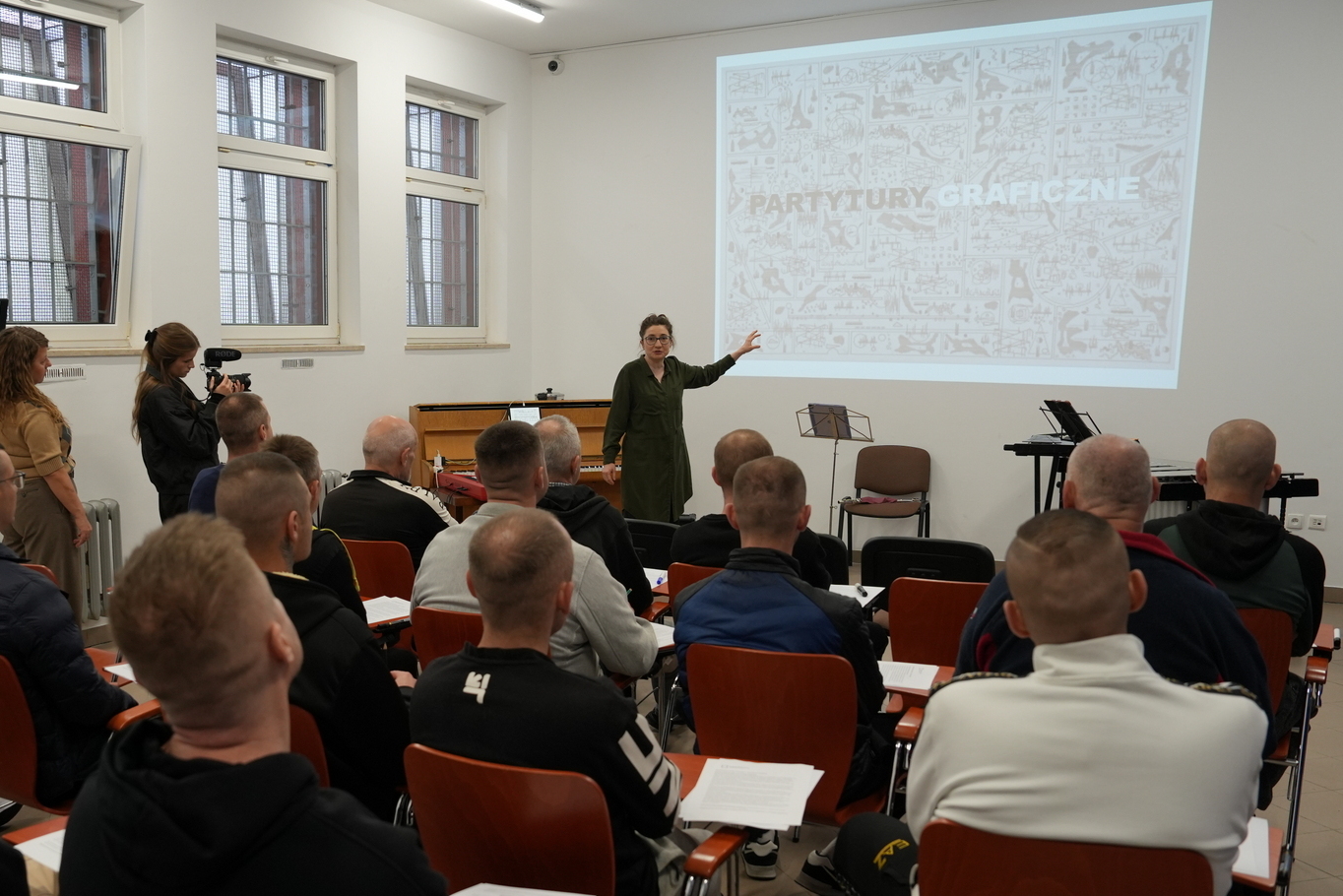
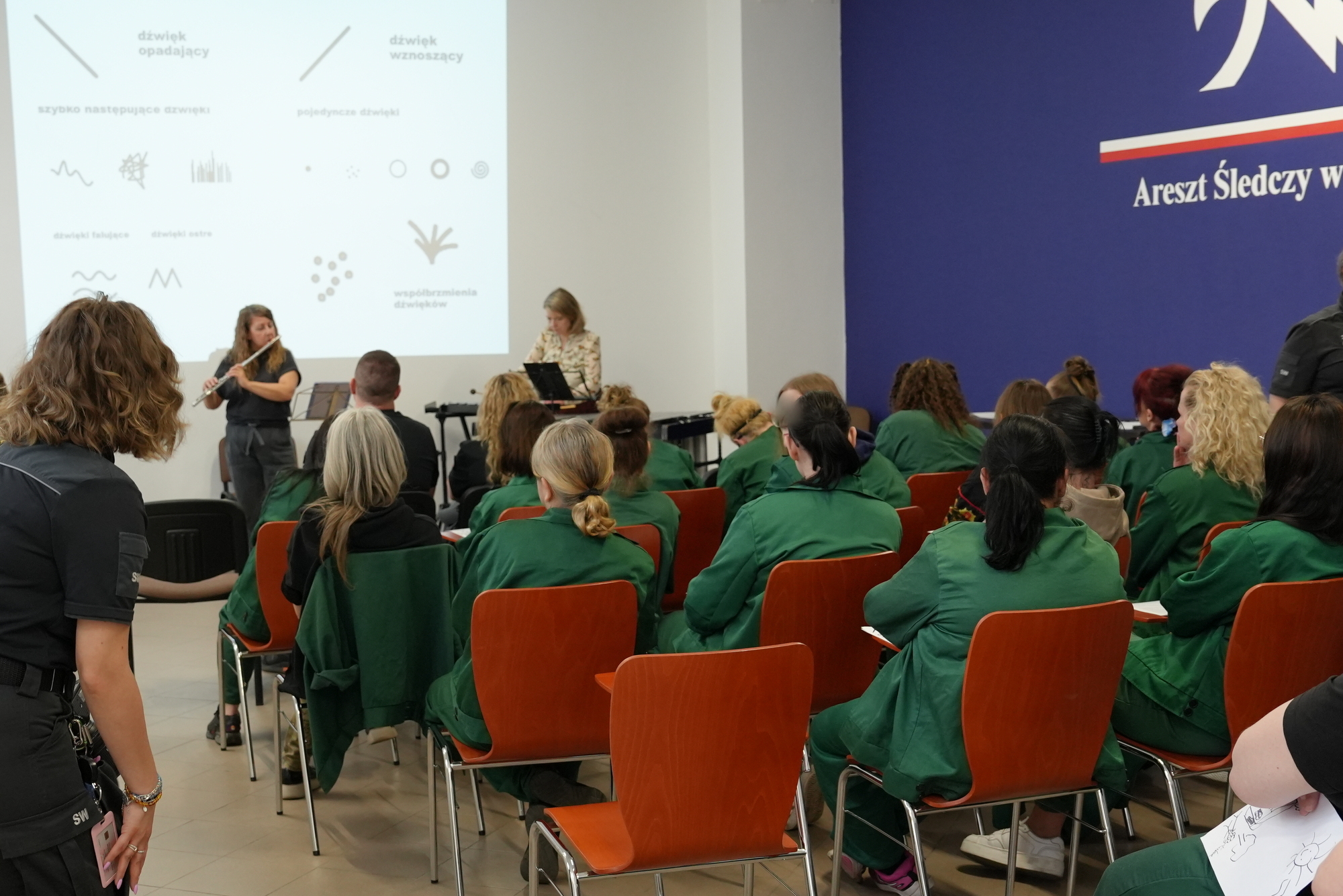
Prowadzi warsztaty artystyczne i edukacji kulturalnej dla młodzieży z ośrodków wychowawczych, więźniów, mniejszości etnicznych i kulturowych, dzieci ze środowisk z problemami, seniorów, a także wszystkich, którzy tego potrzebują. Aktywizuje kulturalnie, artystycznie, społecznie i zawodowo. Dowozi sztukę i kulturę tam, gdzie ich nie ma.
Wyrównuje szanse w powszechnym dostępie do sztuki, kultury i edukacji.
Od 2007 roku prowadzimy działania artystyczne wszędzie tam, gdzie jest na nie zapotrzebowanie. Do wspólnych projektów zapraszamy najciekawszych polskich artystów, edukatorów, kuratorów sztuki i osoby ze środowisk marginalizowanych i wykluczanych z wszelkich powodów. Docieramy do małych miejscowości województwa mazowieckiego, więzień, ośrodków dla uchodźców, ośrodków wychowawczych. pracujemy z mniejszościami.
Sztuka i kultura jest dla nas narzędziem włączania społecznego.
Edukację kulturalną i społeczną prowadzimy w szkołach wszystkich poziomów oraz poza szkołami, wszędzie tam, gdzie jest na takie działania zapotrzebowanie. Dwa razy w tygodniu od 2011 roku mamy zajęcia w więzieniu dla kobiet na Grochowie. Prowadzimy szerokie projekty dla społeczności romskiej i młodzieży z Młodzieżowych Ośrodków Wychowawczych.
Fundacja Dom Kultury is preparing an exhibition summarising ten years of W Kratkę magazine, created since 2013 by women incarcerated in the Warsaw-Grochów Remand Centre in collaboration with visual artists.
At the end of 2026, Fundacja Dom Kultury will present an exhibition marking the tenth anniversary of W Kratkę – a unique project that has been developed since 2013 in the Warsaw-Grochów Remand Centre.
W Kratkę is one of the most interesting initiatives combining contemporary art, cultural education and socially engaged activities carried out in Polish prisons. The magazine is created by women serving prison sentences in collaboration with visual artists, designers, educators and editors. Each issue brings together two worlds: the experiences of incarcerated people and the language of contemporary culture and art.
In 2026, the tenth anniversary issue of the magazine will be published. To celebrate this occasion, we are preparing an exhibition presenting the achievements of the project and the story of a collaboration that, for more than a decade, has connected incarcerated people with renowned contemporary artists and a younger generation of creators.
Beneficiary
Fundacja Dom Kultury (House of Culture Foundation) 18 Kalenicka Street 03-107 Warsaw, Poland
Project Duration
June 2026 – December 2026
Funding
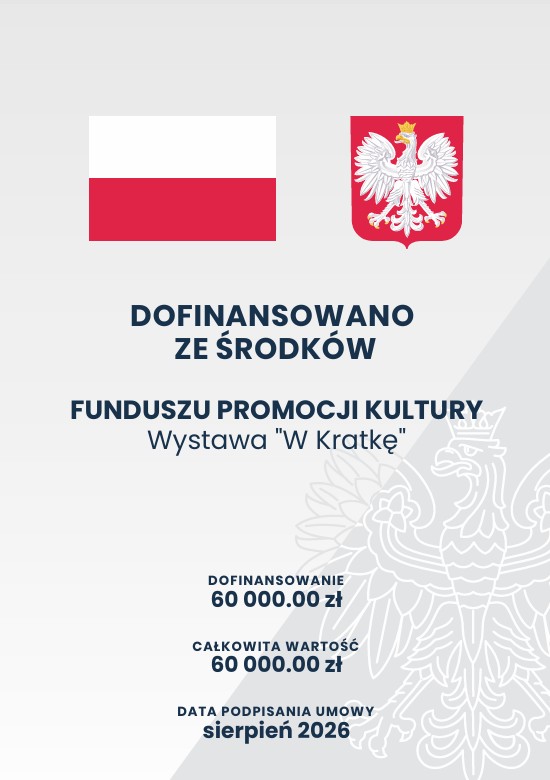
The project is financed by the Ministry of Culture and National Heritage from the Culture Promotion Fund – a state special-purpose fund, under the Cultural Education Programme.
In accordance with applicable regulations, information about the funding is also published on the Foundation’s social media channels and in promotional materials related to the project.
Amount of funding: 60000 PLN Total project value: 60000 PLN
The House of Culture Foundation (Fundacja Dom Kultury) is implementing the project “eWkratke Blog – Cultural Education for People in Prison” in 2026–2027, with funding from the Ministry of Culture and National Heritage under the Cultural Education Programme.
The project continues the Foundation’s long-term educational work in prisons. Its main goal is to develop the cultural, linguistic and social competencies of incarcerated women through regular participation in cultural education activities and creative workshops.
The programme is carried out in two correctional facilities:
Warsaw-Grochów Remand Prison (closed units),
External Unit in Warsaw-Bemowo (semi-open units).
Workshops take place four times each month and include writing and editorial classes, meetings with artists and experts from various fields, discussions about culture, literature and the arts, as well as activities designed to foster creativity and self-expression.
The project’s most important outcome is eWkratke.pl, a unique blog co-created by women serving prison sentences. The platform publishes their texts, reflections, interviews, illustrations and reports from cultural events. The blog serves as a space for dialogue between people in prison and society outside, while also functioning as a tool for cultural and social education.
Participants do not have access to the internet. Their texts are written during workshops or in prison cells and are later transcribed and uploaded by volunteers. Readers can comment on the posts, and their messages are delivered to the authors in printed form. The women then write replies by hand, which are subsequently published online. In this way, a genuine dialogue is created between the world behind prison walls and the world beyond them.
The project has a long-term character. The experience of the House of Culture Foundation shows that regular educational activities carried out over an extended period produce lasting results: they strengthen communication skills, build self-confidence and a sense of agency, and support participants in preparing for life after release.
Beneficiary
Fundacja Dom Kultury (House of Culture Foundation)
18 Kalenicka Street
03-107 Warsaw, Poland
Project Duration
March 2026 – December 2027
Funding
The project is co-financed by the Ministry of Culture and National Heritage from the Culture Promotion Fund – a state special-purpose fund, under the Cultural Education Programme.
In accordance with applicable regulations, information about the funding is also published on the Foundation’s social media channels and in promotional materials related to the project.
Amount of funding: 100000 PLN
Total project value: 100000 PLN
Date of contract signature: 18 May 2026
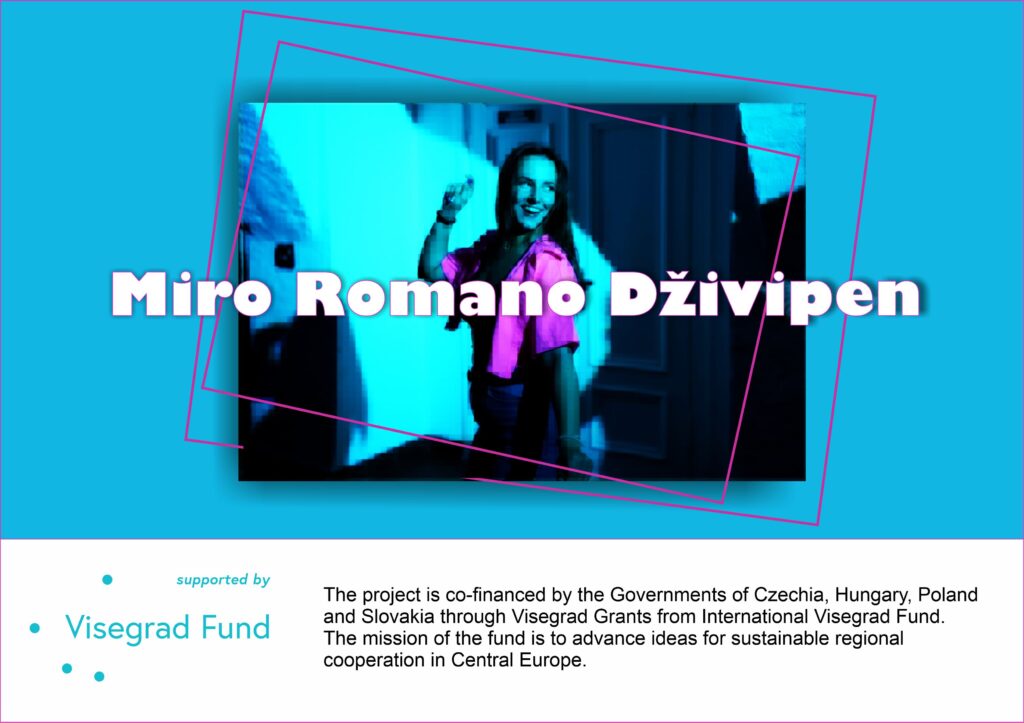
We are delighted to announce that our project Miro Romano Dživipen (My Romani Heritage) – Music Weekend for Roma Youth from the V4 Countries has received a grant from theInternational Visegrad Fund.
The project is co-financed by the Governments of Czechia, Hungary, Poland and Slovakia through Visegrad Grants from International Visegrad Fund. The mission of the fund is to advance ideas for sustainable regional cooperation in Central Europe.
We are launching a new Polish–Italian project funded by the Erasmus+ Programme. Together with the Italian organisation CCO – Crisi come Opportunità, we will develop and test ways of using theatre and stand-up in work with people in prison to support their preparation for life after release.
The project is based on the belief that culture can be a powerful tool for education, personal development and building relationships. For many years, we have organised theatre, creative writing and arts workshops in prisons across Poland. Our Italian partner has extensive experience in using theatre and performance as educational tools in work with people deprived of liberty and young people. Through Erasmus+, we will bring together the experience of both organisations and develop new approaches to this work.
The heart of the project will be the International Methods Laboratory, where Polish and Italian educators will exchange experience, observe each other’s practice and jointly develop workshop methods based on theatre, improvisation and stand-up. These approaches will then be tested during pilot activities carried out in both Poland and Italy.
The project includes two international meetings – the first in Warsaw in September and the second in Sardinia in February. Between these meetings, both partners will run pilot workshops, evaluate the results and further refine the methods developed during the collaboration.
One of the main outcomes of the project will be a practical Toolkit for educators and practitioners working in prisons. It will include tested workshop methods, practical exercises and recommendations based on the experience of both partners. The publication will be freely available to organisations, institutions and everyone interested in using culture to support the social reintegration of people in prison.
The project is implemented together with CCO – Crisi come Opportunità within the framework of the Erasmus+ Small-scale Partnerships in Adult Education (KA210-ADU). We hope that the methods developed during this collaboration will be useful not only in Poland and Italy, but also in other countries interested in strengthening cultural education in prisons.
Funded by the European Union. Views and opinions expressed are however those of the author(s) only and do not necessarily reflect those of the European Union or the National Agency Programme Erasmus + and European Solidarity Corps. Neither the European Union nor the grantors can be held responsible for them.
Fundacja Dom Kultury has received Erasmus+ KA122-ADU funding for the project “Learning to Teach Better.” In autumn 2026, a four-member team from the Foundation will travel to Dublin to take part in a job shadowing programme organised by Education Services to Prisons, a division of theCity of Dublin Education and Training Board (CDETB) responsible for education in Irish prisons. The mobility aims to provide first-hand insight into the Irish prison education system and create opportunities to exchange experience with professionals responsible for the education of people in custody.
Since 2011, Fundacja Dom Kultury has been delivering educational programmes in Polish prisons. We organise creative writing, journalism, theatre, music and visual arts workshops, publish the “W Kratkę” magazine, run theeWKratke.plblog, and are developing an online Information Hub for people in prison and their families. Taking part in Erasmus+ gives us the opportunity to explore solutions used in another European prison education system and to exchange experience with Irish prison educators.
During the job shadowing mobility, we will observe the work of professionals responsible for prison education in Ireland. We are particularly interested in learning more about how the system is organised, the role of education in social reintegration, and the cooperation between prison services, teachers and external organisations. We also hope to explore how educational needs are assessed, how learning programmes are planned, and how educational opportunities are tailored to the diverse needs of learners.
Another area we will focus on is the way information is prepared and shared with people in prison and their families. This is especially relevant to our work, as we are currently developing an online Information Hub that provides clear and accessible information about imprisonment and the Polish prison system. The experience gained in Ireland will support the further development of this initiative.
We will share updates on the preparations, the job shadowing visit itself and its outcomes on our website and social media channels.
Funded by the European Union. Views and opinions expressed are however those of the author(s) only and do not necessarily reflect those of the European Union or the National Agency Programme Erasmus + and European Solidarity Corps. Neither the European Union nor the grantors can be held responsible for them.
Can history become a tool for education, creativity and social change? At Fundacja Dom Kultury, we believe it can. That is why we are launching “The Battle of Grunwald – A Prison Strategy Game”, a project that combines history education, art history, model-making, creative arts activities and strategy games with the social reintegration of people serving prison sentences.
The project is being carried out simultaneously in the Warsaw-Białołęka and Warsaw-Służewiec Remand Centres. It involves 40 men serving prison sentences.
From Matejko to a Strategy Game
The project begins with an introduction to the history of the Battle of Grunwald and the world of strategy games. The first workshop will be led by Grażyna Bastek – art historian, curator at the National Museum in Warsaw and one of Poland’s leading popularisers of art history. The starting point will be an analysis of Jan Matejko’s famous painting The Battle of Grunwald, which for more than a century has shaped Polish perceptions of one of the most important events in the history of Central Europe.
Participants will then work with artist Waldemar Petryk to create three-dimensional models of the battlefield. These will not be traditional historical reconstructions. Instead, the models will be designed as game boards inspired by the structure of a chessboard, enabling strategic gameplay.
The next stage will involve creating miniature figures representing the Polish-Lithuanian and Teutonic armies and developing the rules of an original strategy game inspired by tabletop wargaming mechanics. The workshops will be led by Krzysztof Nessel, who holds a Master’s degree in Social Rehabilitation and has long been involved in model-making and strategy games. Participants will learn the fundamentals of tabletop wargames, jointly develop the game rules and create cards describing the capabilities of individual military units.
The project will culminate in an online game between the two institutions. Immediately before the battle begins, participants will draw lots to determine whether they will fight on the side of the Polish-Lithuanian forces or the Teutonic Knights. As a result, the outcome of the battle will remain uncertain until the very last move. The finale will also include a lecture by Marcin Miros entitled “What If the Teutonic Knights Had Won?”, exploring the possible consequences of a Teutonic victory for the history of Poland and Europe.
Culture as a Tool for Social Inclusion
People in prison belong to groups particularly vulnerable to social and cultural exclusion. Long-term isolation limits access to culture, education and contemporary social developments. It also makes it more difficult to develop interests, acquire new skills and maintain connections with social life outside prison.
This is why initiatives that enable active participation in culture are so important. The project is not limited to teaching historical facts. Participants become co-creators of the creative process – designing, building, painting, planning and making decisions. They learn cooperation, responsibility for a shared task and long-term planning.
The project also helps counteract the effects of social and digital exclusion that often accompany long-term imprisonment. Participants are introduced to contemporary forms of activity enjoyed by millions of people around the world, including model-making, strategy games, historical re-enactment and project-based creative work. They gain new skills and knowledge about cultural phenomena that are widely accessible outside prison but often remain beyond reach within it.
New Passions and New Opportunities
Throughout our work, we have repeatedly observed that contact with culture can become the beginning of lasting change. For some participants, this will be their first encounter with art history. For others, it may be the beginning of an interest in history, model-making, miniature painting or strategy games.
“The Battle of Grunwald – A Prison Strategy Game” demonstrates that history education does not have to be confined to textbooks and that culture can provide a space for developing new interests, strengthening skills and rebuilding a sense of agency. It is another project by Fundacja Dom Kultury that uses art, education and creativity as tools for the social inclusion of people serving prison sentences.
The project is implemented by Fundacja Dom Kultury thanks to funding provided by the Minister of Culture and National Heritage under the National Centre for Culture programme “Culture Interventions 2026.”
Fundacja Dom Kultury is preparing an exhibition summarising ten years of W Kratkę magazine, created since 2013 by women incarcerated in the Warsaw-Grochów Remand Centre in collaboration with visual artists.
At the end of 2026, Fundacja Dom Kultury will present an exhibition marking the tenth anniversary of W Kratkę – a unique project that has been developed since 2013 in the Warsaw-Grochów Remand Centre.
W Kratkę is one of the most interesting initiatives combining contemporary art, cultural education and socially engaged activities carried out in Polish prisons. The magazine is created by women serving prison sentences in collaboration with visual artists, designers, educators and editors. Each issue brings together two worlds: the experiences of incarcerated people and the language of contemporary culture and art.
In 2026, the tenth anniversary issue of the magazine will be published. To celebrate this occasion, we are preparing an exhibition presenting the achievements of the project and the story of a collaboration that, for more than a decade, has connected incarcerated people with renowned contemporary artists and a younger generation of creators.
What will be on display?
The exhibition will feature original artworks published in W Kratkę, including drawings, prints, illustrations, objects and projects created specifically for individual issues of the magazine. These will be accompanied by selected editorial materials, photographs and documentation of the magazine’s development.
The exhibition will present not only finished artworks but also the collaborative process between incarcerated participants and artists. Visitors will be able to see how successive issues of the magazine were created, how relationships developed between participants, and what role art played in fostering dialogue, agency and participation.
Artists
Over the past ten years, the magazine has brought together both established figures of Polish contemporary art and emerging artists. The exhibition may include works by Paweł Althamer, Artur Żmijewski, Daniel Rycharski, Małgorzata Jabłońska, Piotr Szewczyk, Dorota Podlaska, Dariusz Vasina, Beata Sosnowska, Agnieszka Dybowska, Agnieszka Gójska, Magda Byczewska, Anna Tyczyńska, Agnieszka Semaniszyn-Konat, Justyna Kabala, Darren Kruk and Paweł Dunal.
An important part of the exhibition will also be works by students of the Graphic Design Department at SWPS University, who have contributed illustrations and graphic designs to the magazine for several years.
Venue
The exhibition will be presented in the foyer of Komuna Warszawa Theatre, one of Poland’s leading independent cultural institutions. The open nature of the foyer will make the exhibition accessible both to visitors coming specifically to see it and to audiences attending performances and other events organised by the theatre.
Publication and accompanying activities
An integral part of the project will be a publication containing a curatorial text and a selection of materials documenting the history of W Kratkę and the activities developed around it since 2013. The publication will serve as a lasting record of the project and a tool for disseminating its results.
Why is it important?
W Kratkę is more than a magazine. It is a long-term process of cultural education, empowerment, self-advocacy and increasing the visibility of incarcerated people in public life. The project demonstrates that culture can be a tool for communication, cooperation and social inclusion, while art can create a space for encounters between people who normally live on opposite sides of prison walls.
The exhibition will provide an opportunity to look back at ten years of this extraordinary collaboration and at art created in places where it is not usually expected to be found.
The project is co-financed by the Ministry of Culture and National Heritage from the Culture Promotion Fund – a state special-purpose fund, under the Cultural Education Programme