Autor: wojtek
Articles ETP Slovensko SWC – Krzyżowa 2025
The fifth day- Summer Workshop Camp – Krzyżowa 2025
The fourth day – Summer Worksop Camp – Krzyżowa 2025
The thre day – Summer Workshop Camp – Krzyżowa 2025
The second day – Summer Workshop Camp – Krzyżowa 2025
Photo Gallery – Summer Workshop Camp – Krzyżowa 2025
The first day – Summer Workshop Camp – Krzyżowa 2025
Panorama of the City
Project realized by Fundacja Dom Kultury
Project co-impelementer Nowe Centrum Warszawy
Article:
Project Description
“Panorama of the City” is an artistic and integrative project that connects Warsaw’s residents through joint creative activities. Its goal was to create a large-scale painting installation reflecting the diversity of the city’s community. The final event was open to everyone — children, adults, seniors, residents, and tourists — and concluded with the collective creation of the painted Panorama of the City in the square in front of the Palace of Culture and Science on June 28, 2025.
Project Objective
The main goal of the project was social integration through artistic activities and enabling people from various backgrounds — especially those with limited access to culture — to create an artwork together. The project provided space for self-expression, sharing personal stories, and experiencing collaboration beyond social divisions.
Project Locations
The workshops took place in the premises of the participating communities: the Regional Youth Educational Centre in Falenica, the Multicultural Centre, the Nowolipie Group, Dorożkarnia Cultural Centre, the Warsaw-Grochów Remand Prison, and the Anti-Crisis Club. The main event, during which the panorama was collectively created, took place on June 28, 2025, at Central Square next to the Palace of Culture and Science.
Number of Workshops and Method of Implementation
As part of the project, six workshops were held to design sections of the panorama, led by Warsaw-based artists. Participants created their own concepts and sketches of the panorama’s “puzzle pieces,” which were later transferred onto large-format plastic fabrics. During the final event, these puzzle pieces were collectively painted with acrylic paints according to the prepared designs.
Workshop Facilitators
Renowned artists and cultural animators were involved in the project:
- Robert Kwaśniewski (Anti-Crisis Club)
- Waladek Petryk and Irshad Manammal (Multicultural Centre, Polish Migration Forum)
- Joanna Świerczyńska and Julia Bistuła (Nowolipie Group)
- Edyta Kranc (Warsaw-Grochów Remand Prison)
- Praktis (Regional Youth Educational Centre in Falenica)
- Agnieszka Sadurska (Dorożkarnia Cultural Centre)
Project Curator: Damian Kalita, Head of the Education Department at Teatr Studio Gallery.
Project Coordinator: Małgorzata Brus, Fundacja Dom Kultury.
Participants
The project involved individuals from marginalized groups, migrants, people experiencing homelessness, seniors, people with disabilities, inmates, as well as all interested residents of Warsaw and tourists.
Partners
In implementing this remarkable project, we collaborated with STUDIO teatrgaleria, Bar Studio, PKiN Sp. z o.o., the Polish Migration Forum, Nowolipie Group, the Regional Youth Educational Centre in Falenica, and the Warsaw-Grochów Remand Prison.
Project Timeline
The project was implemented from March 14 to July 31, 2025.
The final event took place on June 28, 2025, from 11:00 AM to 7:00 PM.
Slide content
Slide content
Slide content


Graphics: Magdalena Gładecka
Panorama of the City: A Shared Story of Diverse Warsaw

Photo: Justyna Domasłowska – Szulc
Project realized by Fundacja Dom Kultury Warsaw, or any city for that matter, won’t be the same for someone who was born and raised here as it will be for someone who came to the city from another part of the country for a living. Now think about someone who came from another continent to Warsaw in search of better opportunities. I can very well understand this situation, as I come from India and have been living in this city for more than two years. For me, this is a place where people speak a different language, with a different culture, different lifestyle, and different cuisine, and so on and so on. We don’t have winter in the place I come from in India, and my first winter was two years ago, after I moved to Warsaw.
It’s not just me. There are hundreds of migrants and refugees who came to Warsaw looking for a better life. Some plan to stay longer, while for some it is a temporary destination. But how do we (the foreigners) perceive this city? Are we being integrated well? Do we have good friends here? These are not questions that are asked much. Also, it’s not just migrants or refugees; there are many more communities in the city to whom these questions should be asked. Think about the people who face homelessness. They belong to the city, but we keep them on its sidelines. What about people with mobility problems? Do they have accessibility to different parts of the city? How do the women in the detention center realize the city, which is a distant dream of freedom for them?
It was when Fundacja Dom Kultury approached me to associate with their project 'Panorama of the City – Painting Warsaw in Different Perspectives’ that I started to ask these questions myself. It was a great opportunity to not just reflect on myself, but also to think and understand the different social groups and their different realities of the city. This project aimed to bring together individuals from various walks of life, including those experiencing homelessness, women from detention centers, senior citizens, migrants, and individuals with mobility issues, by providing them a unique artistic platform to express their perceptions and reality of the city. The project’s mission was to transform the collective imagination of these social groups into large-format paintings. For each group, a workshop was conducted separately to plan and design what they wanted to reflect about the city on their respective canvases.
I, along with artist Waldemar Petryk, was coordinating the group of migrants to help them express Warsaw as they see it. For us, we had participants from Romania, Latvia, Mexico, Paraguay, India, Philippines, Ecuador, Ukraine, Colombia, and Macedonia. With the cooperation of Polish Migration Forum Foundation, we gathered at the Multicultural Centre at Praga. Though we were meeting for the first time, we bonded easily as we started to discuss our perceptions of the city through the lens of a foreigner. We brainstormed ideas and color. According to Waldek, our panorama hangs suspended between the past and the present. It is an image of a city that first existed as a destination — an imagined place, full of expectations — and later became a space of everyday life, experience, and personal encounter. At the bottom of the painting are views of an imagined city — created ten days ago, captured in the heat of the moment, before a deeper familiarity with the urban space developed. The entire composition is based on a sketch by Shubhendra from India. A symbolic bridge divides the image into two parts: the lower part, depicting the river and the realm of dreams, and the upper part, where the modern architecture of the city emerges. This upper section was also created at the same time, blending different perspectives and stages of becoming familiar with the city.
The group with experience of homelessness was led by the artist Robert Kwaśniewski, who is associated with the Antykryzysowy Club and the Nowolipie Group. The work from this group sheds light on a different reality of the city where a shelter of one’s own is a far-away reality.
A group of young women from the Youth Detention Center in Falenica was led by Praktis, who is the author of works that lie at the intersection of drawing, painting, and street art. He creates graffiti around the world but has a particular fondness for Warsaw’s Praga district. He is also a rapper. During the project, he encouraged the women to collaborate on a shared drawing. He spoke about graffiti worldwide, its history, and the unwritten rules he himself follows — for example, that he never paints graffiti on historic walls or newly built walls, out of respect for human labor. Praktis and the girls created a section of the panorama depicting Śródmieście, with the Mermaid prominently in the foreground as a symbol of freedom — something we all deeply need. The design for their section of the panorama — depicting the Wola district — was developed under the artistic guidance of Joasia Świerczyńska, while the workshop in front of the Palace of Culture and Science was led by Julia Bistuła.
The Nowolipie Group, an artistic collective of people living with multiple sclerosis, or simply people with mobility impairments, have been creating art together for several years. In their Panorama, the people with issues of mobility are just part of the city, like everybody else.
A group of senior women from the Dorożkarnia cultural center, after taking part in introductory workshops led by the artist Agnieszka Sadurska, chose a rare medium for this project. Instead of painting, they decided to weave their panorama using textile materials. It was painstaking, detailed work that required patience and delicate craftsmanship. Embroidery is so often associated with home, warmth, and quiet dedication. By choosing textiles, these women not only created an image of the city but also wove into it traces of memory, tradition, and the human touch. Their panorama is not just a picture—it’s a soft, tactile story of Warsaw, stitched together with time, care, and community.
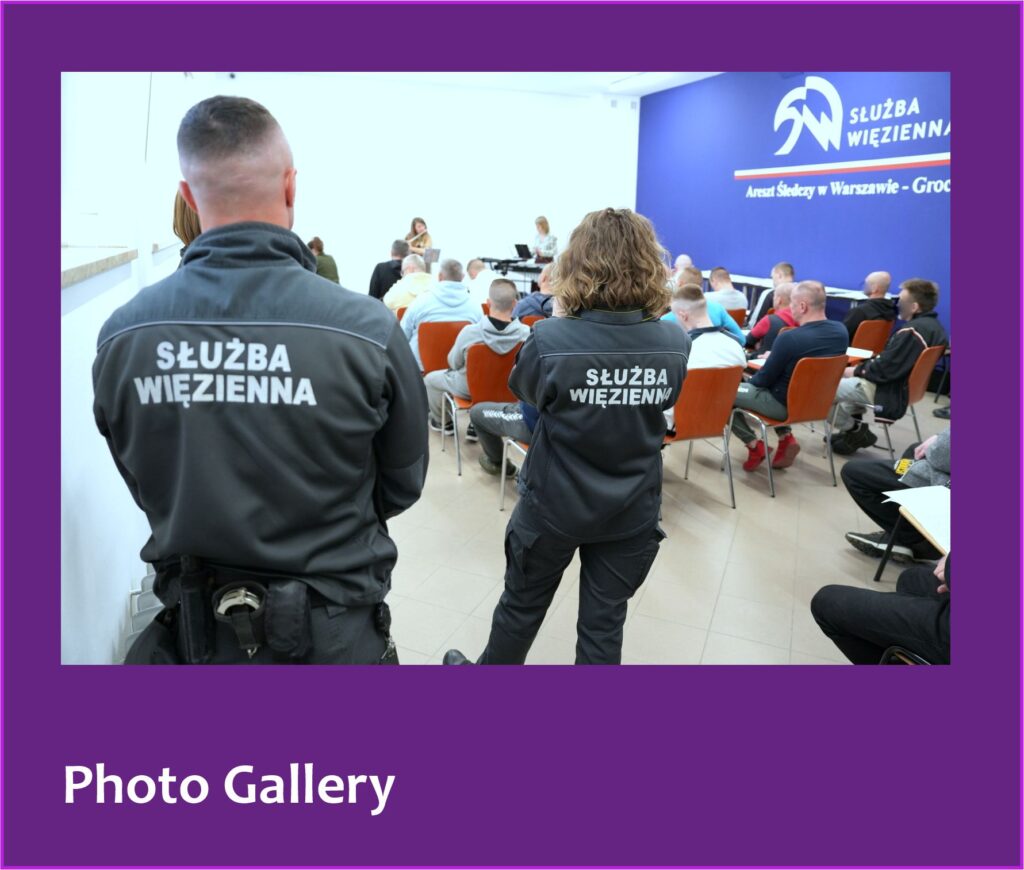
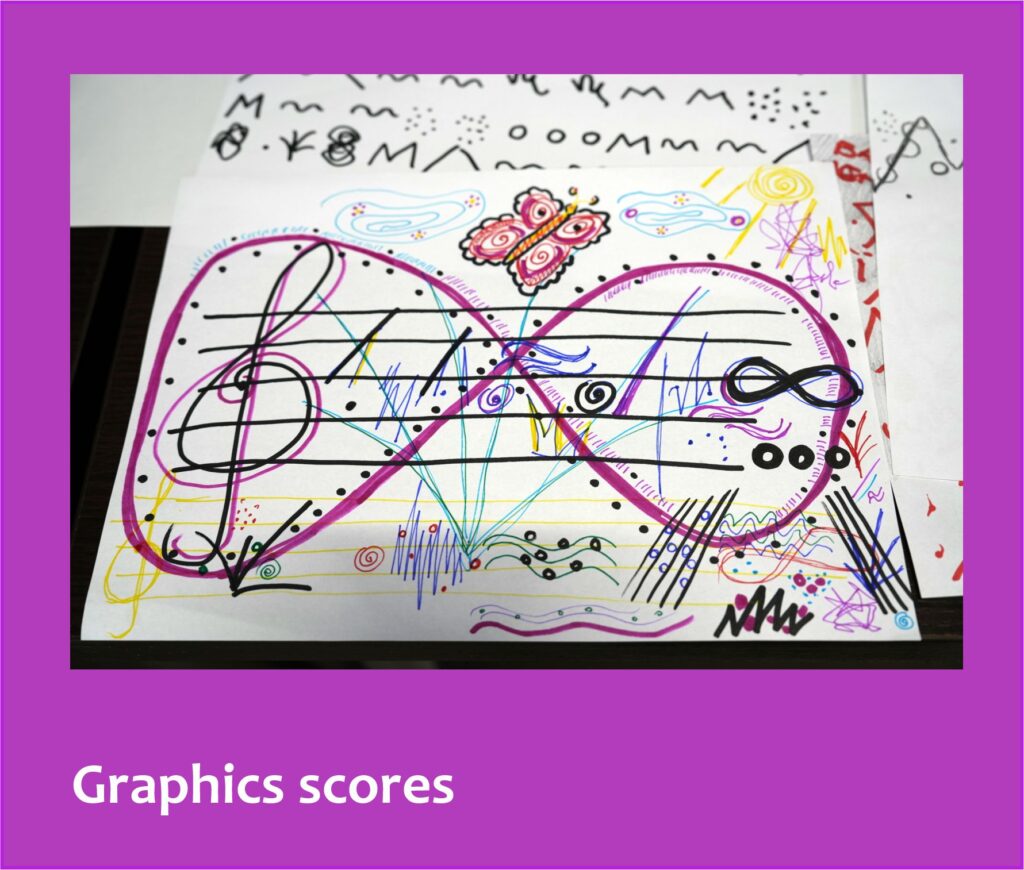
Participants from Warsaw-Grochów Remand Prison, under the guidance of visual artist Edyta Kranc, created a series of illustrations on the panorama dedicated to Praga Południe. While learning about modernist architecture, they explored structures such as Przyczółek Grochowski, prefabricated concrete buildings, Lake Balaton, Park nad Balatonem, and Lake Gocław. The illustration tasks were designed in a way that allowed every person, regardless of experience, to participate with ease. The resulting illustrations depicted a variety of scenes: residents looking out of windows, passersby on the streets, as well as animals and plants from Park nad Balatonem and Lake Gocław. Participants created their own slogans and mottos to accompany the artworks and designed their own patterns and ornaments. Each session ended with a communal viewing of all the works, bringing satisfaction and fostering mutual inspiration.
The Final Day
All the groups of participants representing different segments of society were gathered together on June 28, 2025, at the premise of The Palace of Culture and Science to give life to their ideas and exhibit their works. The preconceived ideas were transformed into wonderful works of art reflecting their impression of the city. Damian Kalita, head of the Education Department at the Studio Teatr Galeria, who is the curator of the project, engaged with the participants and visitors with various discussions and suggestions about the works. His idea of allocating different parts of the city to the different groups to idealize into the canvas made the project more interesting.
Apart from all these groups, another canvas was kept for the tourists, visitors, and the public to color the city. In fact, this canvas became a space of particularly vibrant interaction. The first to approach it eagerly were children visiting Warsaw for the very first time on a school trip. Initially overwhelmed by the new surroundings, they quickly began painting the city through young eyes — capturing whatever caught their attention and fascinated them.
Later, a man with a disability joined in. At first, he hesitated, afraid he might 'ruin’ the painting. But after a few gentle strokes on the canvas for the people with mobility problems, he ended up spending nearly an hour, painting clouds and the sun. He shared how deeply he valued such initiatives — giving people the chance to leave the house, be among others, and enjoy time away from their phones. His words were moving and inspiring, reminding us how important it is to keep creating opportunities like these. There was pure joy in the air and a thoughtful realization: 'It’s wonderful to be able to go out and not just sit glued to a phone.’
This canvas, joined by more people with similar backgrounds, became an eye-opener for the visitors. In their Panorama, the people with issues of mobility are just part of the city, like everybody else. They colored inclusivity on the banner.
By this time, each group was advancing with drawing, immersing themselves in the colors and the company of fellow beings from similar and diverse backgrounds. The panorama drawn by the group with experience of homelessness sheds light on a different reality of the city where a shelter of one’s own is yet unattainable. Another poignant work comes from the women of the Grochów detention center, who chose to draw their beautiful yet colorless panorama in black, representing the grids that separate them from the city. They expressed hope of rejoining the bustling city.
However, having just one empty banner for the public proved far too little. It filled up very quickly, and by the end of the day, there was no space left for new contributions. Next time, it’s worth preparing additional painting surfaces for such situations.
The project culminated in a unique exhibition of these works for the public. It was exhibited for one week at the premise of The Palace of Culture and Science.
One of the main organizational challenges faced during execution was the strong winds, which made it difficult to mount the banners and secure protective materials like plastic sheeting. For future events, it would be wise to plan for alternative materials — for example, painter’s cardboard, which adheres better to the ground.
Organizations should consider conducting regular community meetings or workshops — perhaps once a month — where residents could get to know each other, brainstorm ideas, and plan artistic activities, exhibitions, or outdoor events together. It’s also important to nurture a sense of community among city residents — to show that we can create things collectively, share public spaces, and collaborate beyond screens and technology.
The Panorama of the City project was a unique experience, connecting diverse social groups, generations, and perspectives. It demonstrated that art in public spaces can spark integration, conversation, and the co-creation of reality. A city is not just buildings — above all, it’s people and their shared actions. And everybody needs to be seen and heard, which we felt very much throughout the project.
Author: Irshad Manammal
Cooperation: Justyna Domasłowska – Szulc, Bożena Michewicz