Autor: wojtek
The evaluation report SWC 2024
Interview with Andrzej Grzymała-Kazłowski
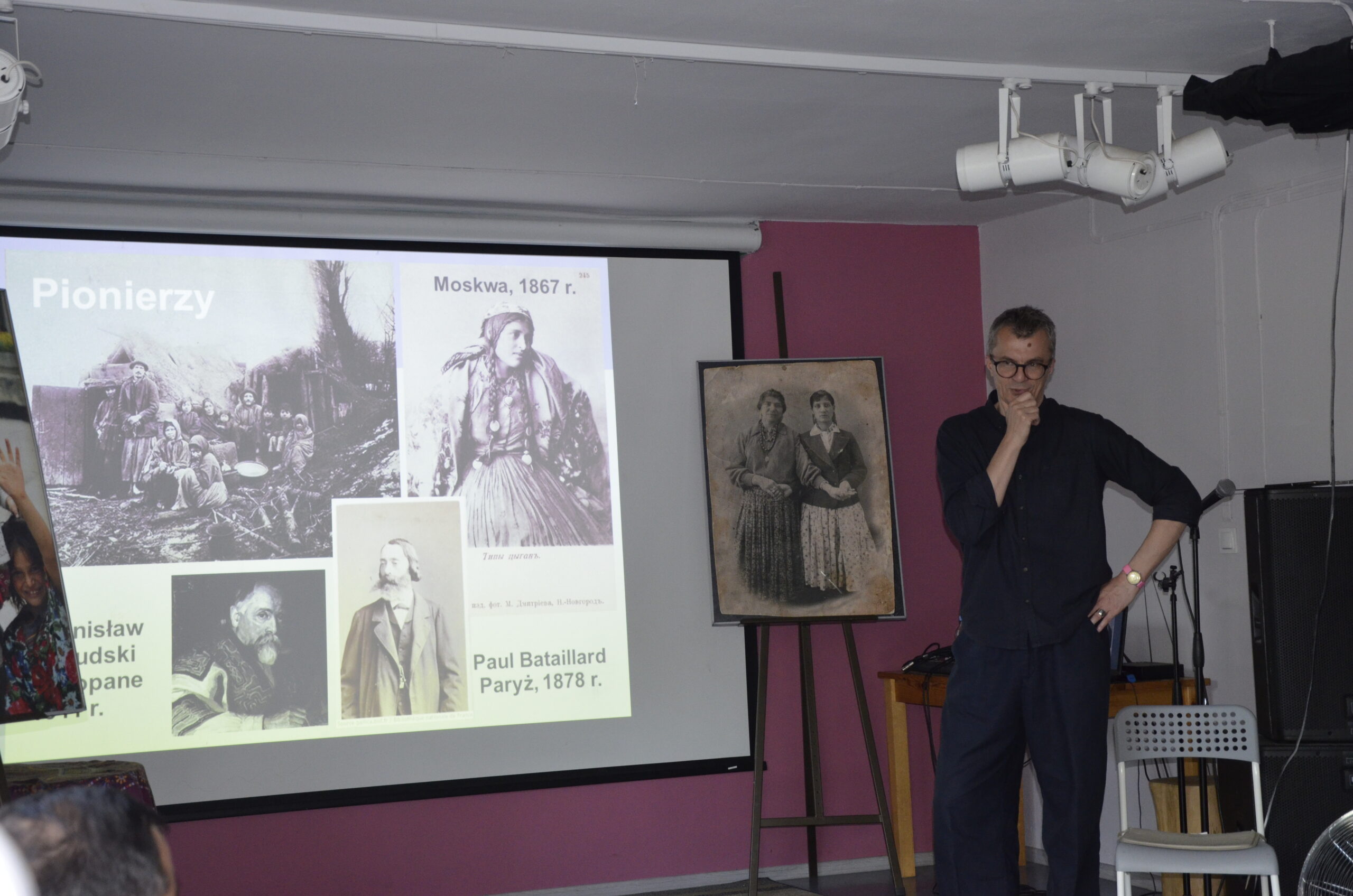
Andrzej Grzymała-Kazłowski, photo: Ada Szulc
Bareforytka Roma, Warsaw’s Roma – how do you see Warsaw’s Roma community? What are its characteristic features that make it different from other Polish Roma communities?
Warsaw Roma are, first of all, a very diverse community. It has its peculiarities, differences, but in public almost unnoticeable. In other cities there are Roma organisations, social and cultural projects. In Warsaw there is practically no bigger activity, except for Praga Południe – Grochów, where a Roma assistant has been working for many years and where various activities, rather positivistic and educational, are carried out on the basis of the Praga Południe Social Welfare Centre. And Ursus, where a community centre associated with the local Social Welfare Center operates. Maybe there is a little lack of such a cultural, artistic dimension here in Warsaw, but it is hard to be offended by this, if there is no such potential or interest, it is difficult to do something by force.
There are several different communities in Warsaw. The largest one, the Polish Roma, who were settled in the 1950s, 1960s. And smaller groups of other former travellers – the Kalderash and the Lovara. In the case of the Lovara, there was a very interesting family who had already emigrated from Warsaw to a large extent – the Czokeszti Lovara, including the Michaj family. Burano (known as Michaj Burano), a very popular singer of the big-beat era, was associated with Warsaw. The Michaj family was active artistically, for instance, to mention their band “Roma”. But unfortunately they have moved away, to other cities, but above all abroad, to Sweden, Germany. Burano lives in the United States.
You can meet the Warsaw Lovara in Gocławek, Ursus, Rakowiec and also near Warsaw in Marki. They live their lives and are not particularly noticeable.
Among the Polish Roma, we have Andrzej Pawłowski, the best-known musician, leader of the “Rat Romano” band. He made a name for himself by (among other things) collaborating with Michał Lorenz on the movie “Bandyta”. He wrote the Roma lyrics for Lorenz’s compositions. Jędrek’s daughter also sang a beautiful vocal. Andrzej is popular with viewers of TV talent shows, where he has also been successful.
The Warsaw Roma live their lives, they have their affairs, they work and try to survive. It’s quite a big community, although we don’t know how big, 500 people or maybe closer to a thousand. For the most part, they function in traditional structures specific to their groups of Polish Roma, Lovara, Kalderash. The latter two have been intermixed for a long time, due to their cultural and dialectal proximity, many families are intergroup families. These communities are beginning to be homogeneous to some extent, although they still remain distinct from the Polish Roma. Warsaw’s Roma are a very interesting community, but hardly known or visible in action, especially compared to other cities.
Since when have the Roma been in Warsaw? What is Warsaw’s Roma history?
We do not know exactly. Most likely they came to Warsaw, as they did to other cities in the Kingdom of Poland, that is, probably the end of the 15th century and the 16th century. Warsaw was becoming an increasingly large city, a market, trade and cultural centre, so the Roma, already present in large numbers on Polish lands, must certainly have appeared here. We also have numerous traces of their presence in the city books, although many documents were unfortunately burnt by the German occupiers during World War II. But some of the earliest references to Roma in Warsaw speak of courtiers of the Waza dynasty. Grants of authority to the so-called 'Elders over the Gypsies’ have been preserved, including Jan Kazimierz’s grant to Matiasz Korolewicz, son of Janczy – the previous supervisor by the order of Władysław IV. We know that this Janczy was a bagpiper, a musician at the court of the Waza dynasty, probably a newcomer from Hungary or with Hungarian roots – the name „Janczy” may indicate this.
In modern times, Edward Dębicki, a great musician, composer and social activist from Gorzów Wielkopolski, recalled that there were documents in his family confirming that the band of his ancestors played at the court of Marysieńka Sobieska.
Then there is the whole history of Warsaw city life rather related to temporary visits than bourgeois life. Unfortunately, these are mainly persecutions, recorded in documents from circuses, where Roma are mentioned as being locked up, prosecuted for having led a nomadic, „loose”, „vagrant” lifestyle.
We have a relatively large amount, a rash of information and reports from the second half of the 19th century, that is, when the so-called migration of Lovara and Kalderash – Roma freed from serfdom on the territory of present-day Romania and Hungary – began. They appeared in and around Warsaw after the January Uprising, when unrest and hostilities ceased. In the Warsaw „Tygodnik Ilustrowany” of 1868, there was printed an engraving and description of the Kalderash’ camp in Saska Kępa. Each year, more and more similar information appeared.
In the 1920s, 1930s, the press of free Poland quite often wrote about various royal reshuffles among the Kalderash, who presented themselves to journalists and the public as kings, chiefs, superiors, presidents of the 'Gypsy’ nation. Of course, this had little to do with the truth – they were at most the superiors of their ancestral groups. However, for the media, especially the more 'revolting’ ones, it was something tasty, sometimes with a fight, sometimes a shootout in the background. One of these kings, Matejasz Kwiek, was even killed by an accidental gunshot. Coronations, abdications, manifestos… the press was fond of quoting it. The apogee was the coronation of Janusz Kwiek in 1937 at Legia Stadium, where both the radio broadcast and foreign media correspondents and photographers were present. We have this event very well documented. Janusz Kwiek was crowned by the protopresbyter of the Orthodox Church. In the place of honour sat government officials, the wife of Prime Minister Składkowski, generals, colonels and the entire Sanacja ruling class watching the spectacle, which was the election of a king, but at the same time a ticketed concert and an attraction in itself.
And the tragic times of the war… In Warsaw the Roma were hiding and were prisoners in the ghetto. Transports of Roma from other ghettos were sent to the Warsaw Ghetto. In his journal, the head of the Warsaw Judenrat, Adam Czerniaków, describes the arrival of a group of Roma from the Łowicz ghetto to the Warsaw ghetto. From the description, it appears that they were Kalderash. The Roma stayed in the Warsaw Ghetto for a shorter rather than longer period of time, and then, like most, ended up in the gas chambers of Treblinka. During the war, the trapping of Roma was continuous, and they were either shot or sent via Pawiak to concentration camps. Jerzy Ficowski cites dozens of places where Roma were exterminated in Warsaw during the Second World War.
Post-war times: the Roma, survivors of the Holocaust, came here, they returned, just like other Varsovians and visitors. They settled here more or less compulsorily. In the 1940s and 1950s, rather voluntarily – for example, the Michaj family, who moved here from Lublin and earlier repatriated from the Soviet Union. But as early as 1964, a brutal forced settlement campaign was launched. A lot of families were settled here, mainly from the Polish Roma group. The picture of the Roma presence in Warsaw is, on the one hand, the result of the post-war settlement action and, on the other hand, of the migration movement. Whoever could, who had foreign connections, left Poland to go abroad. Then came the 1990s and economic hardships, which affected all Poles, including the Roma, and caused them to leave in large numbers for the British Isles, Scandinavia and Germany. The Roma community in Warsaw is far less numerous than it was back in the 1980s. We don’t know exactly what these estimates look like today.
But let’s mention some more details from recent years… We have several murals in Warsaw. One by Krzysztof Gil, a prominent Roma painter – in Grochów at 42 Męcińska Street, from Grochowska Street, near the Wiatraczna Roundabout – is a commemoration of the Roma Holocaust – „Zalikierdo Drom”, or broken road. And at 2 Raszyńska Street, where the primary school from the Bednarska complex is located, in the courtyard on the wall surrounding the football pitch, a series of murals was created by Dariusz Paczkowski, an excellent, well-known artist of Polish Street Art, in collaboration with young people from this school. There we have a gallery of important figures. There is the excellent Roma violinist Kororo Stefan Dymiter, Karol Parno Gierliński – poet, sculptor, Roma activist, Nońcia Alfreda Markowska, heroine of wartime. And Papusza, of course. These places are definitely worth a look.
Where did the idea to create a Museum of Roma Culture in Warsaw come from?
The museum is a bit of a result of my being among the Roma, working with the Roma, where contacts combined with personal interest, history, art, paintings and prints. At first I collected and bought things that I liked, that I wanted to hang on my wall. At a certain point, there were so many of these things that I succumbed a little to collector mania… The collection started to grow, to expand. I started buying things also unrelated to aesthetics, art, and more to historical importance. At a certain point I decided that the collection was large enough, significant enough, to try to organise it into a museum collection. And I went through this process where the Ministry of Culture and National Heritage decided that my collection deserved to be included in the register of private museums. It’s a flying museum, still unfortunately without a permanent exhibition, showing the collection from time to time in exhibitions and on the Web at www.romuzeum.pl. Also on the Facebook profile “Papusza i Muzeum Kultury Romów w Warszawie” (https://www.facebook.com/Papusza1) – although this is more of an information channel, where I inform about contemporary events rather than show the collections, although from time to time, in an appropriate context, fragments of the collection can also be seen.
Interviewed by Ada Szulc from the “Dom Kultury” Foundation.
We would like to thank Magdalena Wychowska for her help in transcribing the interviews.
Interviews with participants
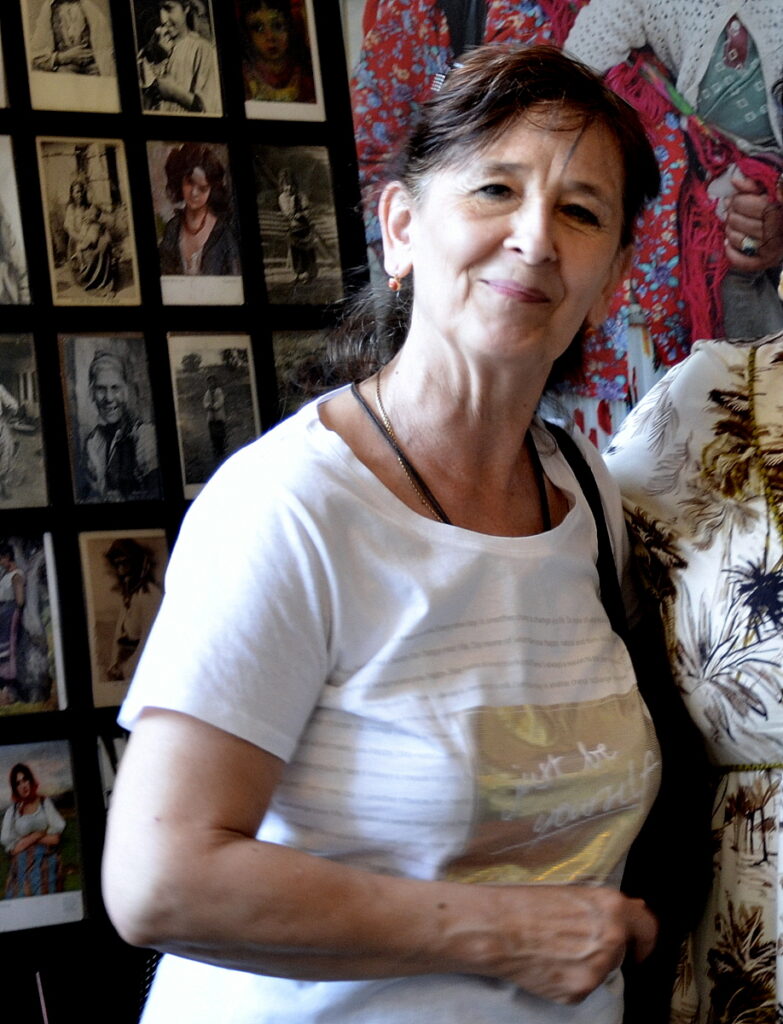
Interview with Ewa Pawłowska
How would you characterise Warsaw’s Roma community?
I’ve been in the Roma community for about 40 years, professionally for about 20 years. The Roma community is very cooperative. Education used to be a big problem. I was working in schools where Roma children were doing their compulsory schooling. Of course, at the very beginning, children who start education have problems with reading and writing, because in their homes, they only speak Romani. At our Social Welfare Centre in Praga Południe, projects were implemented which, among other things, provided children with the opportunity to learn using a community nursery school on the Centre’s premises, where there were Roma and Polish children. Playing with Polish children had a very good impact on the future and intellectual development of Roma children, because they acquired the ability to pronounce Polish words, they knew the concept of a word, which paid off later at school.
What was your job at the Social Welfare Centre in Praga Południe?
I’ve been working at the Centre in Praga Południe as a Roma community assistant since 2004. For many years, there were projects there that united the Roma, even Roma minorities from other groups – Polish Roma, Kalderash, Lovara… And this diversity also allowed for joint activities, closer contacts. There were out-of-town trips, there were vocational projects, adult literacy projects, summer in the city, the “Aladdin” kindergarten. Today this would probably be unnecessary, because times have changed and these skills are acquired by children through technological innovations. Mobile phones, smartphones, computers have appeared, so children themselves are interested in interacting with others. It has helped them in life. In order to contact someone they had to text and for that you need to know the letters. Working in schools, I had more than once such alarms about lack of homework, so there were also female teachers from schools who were willing, or female students who helped children with tutoring in a home environment.
Do you think that such meetings, festivals, such as the Wandering Festival “Romani Culture”, are important and why?
Very important, because associations and foundations working for the Roma present traditions, customs, habits to non-Roma.
Interviewed by Ada Szulc from the “Dom Kultury” Foundation.
We would like to thank Magdalena Wychowska for her help in transcribing the interviews.
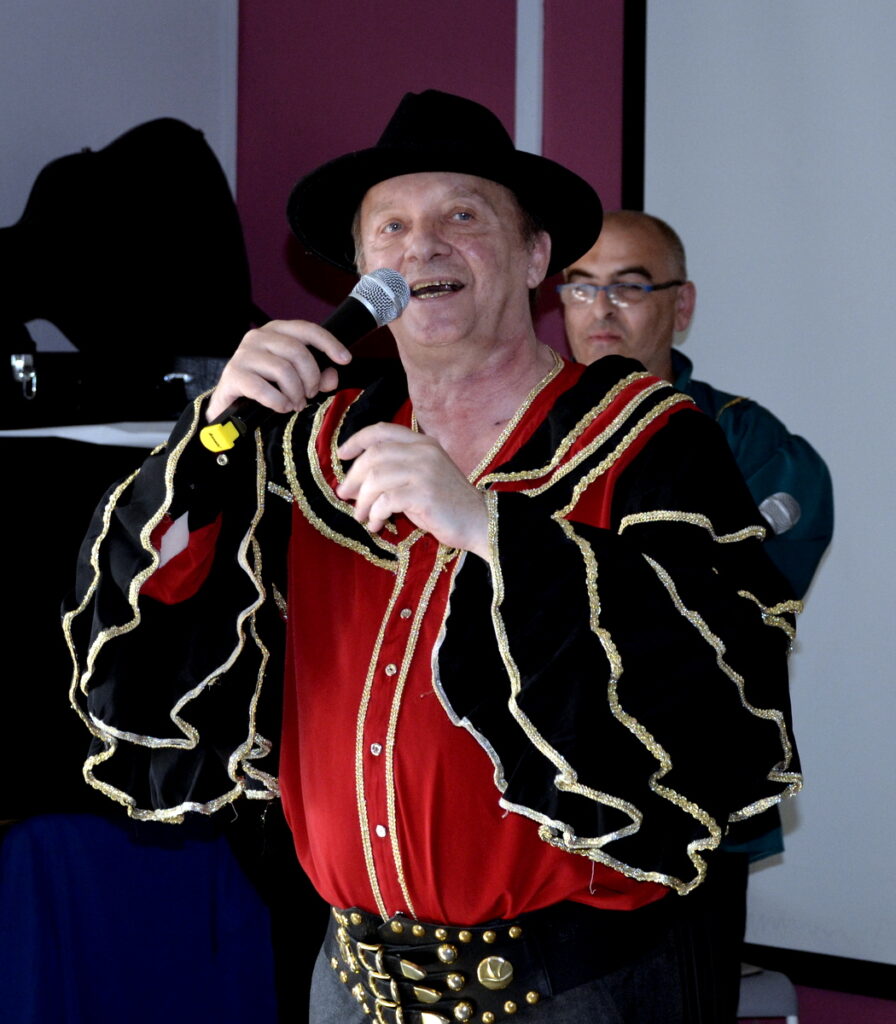
Interview with Andrzej Pawłowski
You are a Warsaw Roma, do you know when your family settled in Warsaw?
In the 1950s. I think it was ‘56, my father claimed to be Bulgarian, he was introduced to my mother then. My mother was of French origin, that’s why I’m a white Gypsy… We lived in terrible conditions, in barracks. It was the 1960s, I remember I was four years old. Then we lived in Wawer, now we live in Praga Południe on Grochowska Street. So I have a lot of good and bad memories from that time.
When did you get involved in music? Were musical traditions present in your family?
Of course they were. I’ve been singing since I was a kid, at the age of 6 or 7 I think I started singing. At the moment I’m leading a Roma band called Rat Romano, which gives concerts. I’ve been singing since I was a child.
Do you create your own compositions, or are they rather arrangements of well-known hits and traditional music?
I’m registered with the Authors’ Association ZAiKS as an artist. I also sometimes write myself, or I borrow melodies from other performers and make a different arrangement out of it.
What do you consider to be your greatest achievement?
Performing on The Voice Senior in 2021.
What are your dreams and plans for the future?
At this age you don’t want to have any plans. You know, I’m getting close to old age. So my career has already gone, it’s gone away from me, I can’t achieve anything anymore…
But you will continue to give concerts?
Yes, yes… Of course.
Interviewed by Ada Szulc from the “Dom Kultury” Foundation.
We would like to thank Magdalena Wychowska for her help in transcribing the interviews.
Program – Summer Workshop Camp
How to work effectively with young people in an unusual way?

Photo shows a Polish-Slovak group of project participants after a lecture by Kumar Vishwanathan at the Białołęka District Public Library in Warsaw
How to Work Effectively with Young People in an Unconventional Way? – Project Summary
Since June 2024, we have been implementing the project „How to Work Effectively with Young People in an Unconventional Way: Building Cooperation in Non-Formal Youth Education.” This initiative focuses on exchanging experiences and developing new educational methods between NGOs from Poland and Slovakia. Thanks to our collaboration with ETP Slovensko and invited experts, we have successfully developed innovative approaches to youth education through culture, art, and social activities.
On-Site Meeting in Warsaw – Intensive Knowledge and Experience Exchange
After months of online meetings, in February 2025, we held an in-person training session in Warsaw, bringing together educators from both countries and guest specialists. The program included:
- Streetworking Workshop with Karol Kołbyk – An educator and streetworker from Pracownia Edukacji shared his methods for working with socially excluded youth.


Photo: Jusyna Domasłowska-Szulc
- Lecture by Kumar Vishwanathan – A Czech social activist, founder, and director of Vzajemne Souziti , who spoke about his experiences working with young people at risk of exclusion.


Photo: Jusyna Domasłowska-Szulc
- Calligraphy Workshop at the District Educational Center in Falenica – A hands-on session using art as an educational tool, led by educator Małgorzata Brus from the Dom Kultury Foundation.


- Study Visit at the Itaka Foundation – A discussion and lecture on supporting young people in mental health crises, led by Anna Jurkiewicz, head of Itaka Foundation .

- Session at Teatr Studio – A presentation on youth engagement and community-building around cultural institutions, led by Damian Kalita, head of the Education Department at Teatr Studio.


Photo: Jusyna Domasłowska-Szulc
- Workshop at Zachęta National Gallery of Art – A session on inclusive art education methods, led by Dr. Monika Weychert, head of the Education Department at Zachęta.


Photo: Jusyna Domasłowska-Szulc
Project Results
- Average rating of organization and program content: 9.5/10
- 100% of participants found the acquired skills useful in their work with youth
- Most appreciated elements of the program: Streetworking and calligraphy workshops, meetings with practitioners, and experience exchange between participants from Poland and Slovakia.
- Future recommendations: More group integration, topics related to digital education and cybersecurity, and expanding cooperation with additional cultural institutions – SO WE KEEP MOVING FORWARD!
A Project Full of Inspiration and New Methods
The project „How to Work Effectively with Young People in an Unconventional Way” has brought many inspiring outcomes. Participants have developed new methods for working with young people, incorporating art, culture, and non-formal education as tools for social inclusion. Through the collaboration of educators from Poland, Slovakia, and the Czech Republic, we facilitated an exchange of experiences and diverse approaches to supporting youth.
Practical workshops such as calligraphy, streetworking, and activities in cultural institutions demonstrated how to creatively build relationships and develop young people’s skills. Meetings and study visits resulted in new contacts and partnerships that will continue beyond the project’s completion. Most importantly, participants left inspired and ready to implement their newly acquired knowledge and develop innovative educational programs.
This project was implemented with the support of Erasmus+ (KA153-YOU). We extend our gratitude to all participants for their dedication and hope that the jointly developed methods will serve as an inspiration for future initiatives!
Funded by the European Union. The views and opinions expressed are solely those of the author(s) and do not necessarily reflect those of the European Union, the Foundation for the Development of the Education System or the National Agency of the Erasmus+ Programme and the European Solidarity Corps. Neither the European Union nor the grant awarding bodies are responsible for them.


I attack the alphabet with acrobatics – alphabet challenge
“I attack the alphabet with acrobatics* (alphabet challenge)” is a hip-hop project aimed at girls from the District Education Centre in Falenica.
It included 10 Polish language and rapping lessons, an animation and typography workshop and a professional recording session. A total of 20 girls took part in the activities. They participated in the workshops, wrote their own lyrics, some graphically designed the letters for the challenge and others decided to sing the verses and take part in the recording.
The project fits in with the Internet’s well-known ‘alphabet challenge’, which involves rapping verses written using one-letter words (while keeping rhyme, flow and as much sense as possible in the lyrics – as artist Jeden writes on YouTube).
The aim of our project, which ran from spring to autumn 2024, was to introduce participants to the culture and strengthen their language skills, and to encourage them to pursue their own creativity to help them express their feelings, reflections, fulfil their passions and establish communication with the environment and society – through rap.
The culmination of the series of workshops was for the girls to write their own lyrics – short verses for consecutive letters of the alphabet (in one verse, all words start with the same letter), which fit into the so-called alphabet challenge, sing them and co-create an animated music video for them, which was published on the Internet.
In our project, rap became a tool for the social inclusion of excluded people and a pretext for the participants to learn about national culture, in theory and practice, and to become its active broadcasters.
To carry out the project and to co-create it, we invited: rapper Mati Fuczyło, visual artist Andrzej Budek, actress and improviser Kinga Kosik-Burzyńska and poet, playwright Marcin Cecko. The music has been provided by Whysowavy. The recording was made at Flightcore Studios.
The premiere screening of the music video took place on 17 October 2024 at the Studio Theatre Gallery and Studio Bar.
* The title is a quote from the artist Jeden’s track, entitled “Alphabet challenge”.
Photo report on the screening and tour of the Studio Theatre Gallery and the theatre costume storage.


Photo: Justyna Domasłowska-Szulc

Author of the poster: Klaudia Borawiak
Photos from the project implementation


Photo: Małgorzata Brus

The project was co-financed by funds from the Ministry of Culture and National Heritage within the framework of the programme National Centre for Culture: Culture – Interventions 2024.

Gambling – everything you need to know about addiction

’Gambling – everything you need to know about addiction’ is a project of our Foundation, which we have realised together with the Bridge of Friendship Kartlosi Foundation from Georgia.
The project included an intensive training programme for Georgian secondary school teachers on the prevention of youth addiction to gambling. The programme was prepared by Polish experts in cooperation with Georgian experts, so that it corresponds to the Georgian socio-cultural situation.
The training of 16 teachers from three regions in Georgia where the risk of gambling addiction among youth is growing faster than in the other regions, took place at the end of September 2024 in Kutaisi, Georgia.
We ware implementing the project in cooperation with our Georgian partner, the Bridge of Friendship Kartlosi Foundation. The organisation was founded in 2006 and initially dealt with the Ossetian-Georgian conflict and carried out activities to bring the two sides closer together (joint newspaper and radio, mediation, joint projects). Over time, activities have expanded to include non-formal education activities – working with schools, teachers and local authorities to increase youth participation in social and political life. Kartlosi is also involved in promoting peaceful ways of conflict resolution among young people in Georgia – workshops and trainings on negotiation, peer mediation, and has been working on strengthening school democracy and student participation in Georgia since 2013.
The coordinator of the project „Gambling – everything you need to know about addiction” from the Georgian side was Lela Mazmishvili: programme director of Kartlosi, creates and coordinates social, educational projects, coordinator of international programmes (Erasmus+). She also works on social media communication and is an experienced trainer in the field of human rights, anti-discrimination, implementation of public/social action.


Anna Osowska – Rembecka and Beata Bartosiewicz
The Polish experts that we invited to implement the project “Gambling – everything you need to know about addiction” are Anna Osowska – Rembecka and Beata Bartosiewicz. Both have extensive experience in developing addiction prevention training programmes and are experienced trainers.
Anna Osowska-Rembecka – doctor of social sciences, expert in first-line support for victims of domestic violence at the Women’s Rights Centre Foundation, community therapist at the TOGO Centre for the Development of Your Potential in Warsaw. Academic lecturer at the Maria Grzegorzewska Academy of Special Education in Warsaw and at the Pedagogium – Higher School of Social Sciences in Warsaw and the Higher School of Banking.
Member of the Programme Council of the Congress of Women, social activist. Co-author of guides on violence at home and at work. She conducts workshops in the area of addiction prevention, including gambling addiction, in the field of domestic violence prevention and dealing with aggression. She works with children and young people from threatened and dysfunctional families, in particular those experiencing or witnessing domestic violence, at risk of demoralisation and experiencing severe stress as a result of inadequately exercised parental authority, as well as with young people with adaptation difficulties in the school, local and peer environment, difficulties related to the lack of ability to control aggression, addicted to psychoactive substances, computer games and gambling.
Beata Bartosiewicz – Master’s degree in pedagogy, psychotherapist working in the integrative-systemic approach in the second year of the 4-year psychotherapeutic training at the Dialog School of Psychotherapy. Certified specialist in domestic violence prevention, aggression replacement educator, specialist in developmental activities for adolescents in relation to the risk of behavioural addictions. She has completed numerous trainings and courses including a study of domestic violence prevention, Solution Focused Therapy 1st and 2nd degree, TSR – working with couples. She has also completed training in motivational dialogue and uses it in her work with addicted people. In addition, she has completed interpersonal and intrapsychic training. She has more than 15 years of experience working with children and young people from families at risk of social exclusion and dysfunctional families, in particular those experiencing or witnessing domestic violence.
Contributors to the publication: Megi Bibiluri; Ada Szulc
Editor: Megi Bibiluri
Graphic design : Shalva Muradashvili
Gori 2024
License: Made available under a Creative Commons Attribution 4.0 licence.


Photo: Fot. Bridge of Friendship Kartlosi, Justyna Domasłowska-Szulc
Project co-financed by funds from the Polish-American Freedom Foundation within the framework of the RITA programme – Region in Transition implemented by the Education for Democracy Foundation


W Kratkę No. 9
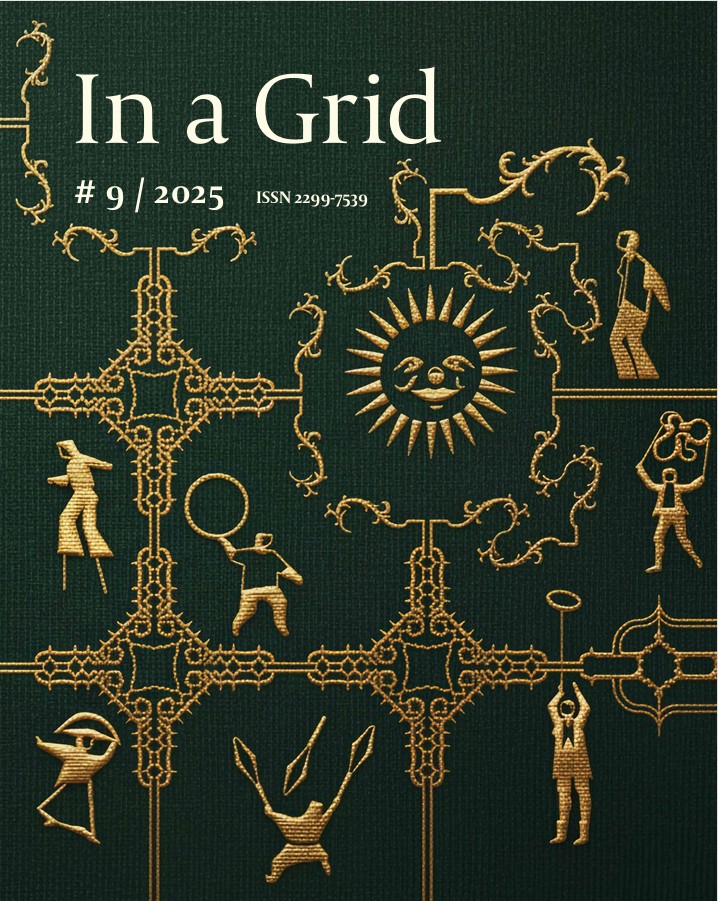
W Kratkę No. 9 is another edition of this unique magazine created by women serving prison sentences at the Warsaw-Grochów Remand Prison (including those incarcerated both in Grochów and in the External Ward in Bemowo), together with artists from the outside world, particularly those connected in various ways with the Department of Graphic Arts at SWPS University in Wrocław.
The ninth issue is overseen by the editor-in-chief, Agata Maczkowska, and the artistic directors, Dr Małgorzata Jabłońska and Dr Piotr Szewczyk. The theme of this edition is joy, rest and laughter.
“W Kratkę” – The Only Magazine of Its Kind in the World
Since 2012, a unique journalistic and artistic editorial team has been operating in the Warsaw-Grochów prison. The editorial meetings bring together an average of 20 incarcerated women and people from the outside world: journalists, writers, teachers, visual artists, and students of journalism, graphic design, and communication. The aim of these meetings is not only to prepare the next issue of “W Kratkę” but also to explore fundamental questions about the significance of culture and art and their social roles. A crucial aspect of the project is also the social reintegration of incarcerated individuals through active participation in cultural life.
A Unique Collaboration of Art and Incarceration
“W Kratkę”, published as part of cultural education initiatives by the Warsaw-based Fundacja Dom Kultury (House of Culture Foundation), benefits from a comprehensive graphic design, made possible through collaboration with lecturers and students from the Department of Graphic Design at SWPS University. This partnership has been ongoing since 2021. The magazine stands out due to its thoughtful and original graphic concept, developed under the artistic direction of Dr. Małgorzata Jabłońska and Dr. Piotr Szewczyk, the creator of the magazine’s layout. Their contribution ensures that “W Kratkę” is unique—not only among prison publications but also within the realm of artistic magazines. The project also provides students with valuable experience, as they create illustrations for each issue as part of their professional training.
A Magazine That Unites Different Perspectives
The magazine holds significant appeal for a wide audience, including socially engaged artists, educators, psychologists, social activists, and, most importantly, incarcerated individuals themselves. Its high-quality design and publishing standards also make it attractive to art enthusiasts. Thanks to the collaboration between Fundacja Dom Kultury and the Director General’s Office of the Polish Prison Service, the printed version of the magazine is distributed to prison libraries across Poland, while the digital edition is available to the general public.
Since 2022, “W Kratkę” has expanded its editorial team to include male inmates from the Wołów Prison, followed in 2023 by incarcerated men from the Warsaw-Białołęka Detention Center. This development has broadened the range of topics covered in the magazine and enriched the diversity of writing styles and perspectives.
Education and Creativity in Prison
Producing “W Kratkę” is not only about editing articles but, above all, about intensive cultural education. Participants engage in workshops that serve as the foundation for their written work. Their contributions are then published, helping to disseminate knowledge about culture both within prison walls and to the outside world.
„We know from bitter experience that life in prisons too easily fades into obscurity, becoming invisible and, to outsiders, somewhat unreal. (…) But deprivation of liberty should not mean deprivation of respect, visibility, and a sense of purpose. And this is what ‘W Kratkę’ is about: dignity in a difficult—perhaps the most difficult—situation in life,” wrote Agata Czarnacka in the editorial of the magazine’s 8th issue.
International Recognition
The project has gained recognition not only in Poland but also on the international stage. “W Kratkę” and Fundacja Dom Kultury participated in Jenny Brockman’s Entanglement 4 #Melody in Kassel, as part of documenta 15. Artists engaged in the foundation’s prison projects, including Małgorzata Jabłońska, Piotr Szewczyk, and Józek Gałązka, contributed to this prestigious event. The initiative was curated by Antek Burzyński.
A Changing Editorial Team
The magazine has different editors-in-chief over time, and the prison editorial team evolves as well—female inmates complete their sentences, are released, or are transferred to other facilities. However, the foundation of “W Kratkę” remains unchanged: regular cultural education, which ensures the continuity of this exceptional project.
More than just a magazine, “W Kratkę” is a creative space where incarcerated individuals and artists collaboratively explore the essence of culture, art, and humanity—regardless of their circumstances.

The special edition of “W Kratkę – On Beauty” was published thanks to a grant from the YES Foundation.
The Dom Kultury Foundation cooperates on an ongoing basis with the Detention Centre in Warsaw Grochów and the Detention Centre in Warsaw – Białołęka, as well as with the Department of Graphics at Wrocław’s SWPS University, in the persons of Dr Małgorzata Jabłońska and Dr Piotr Szewczyk, and their students, in creating the ‘W Kratę’ magazine.

Dr Małgorzata Jabłońska

Dr Piotr Szewczyk

An amazing publication by Małgorzata Jabłońska of the Graphics Department at Wrocław’s SWPS University dedicated to the process of creating “In a Grid” from a graphic designer’s point of view.
The authors of the publication are Paulina Woźniak and Mateusz Antczak.


Co-financed by funds from the Ministry of Culture and National Heritage from the Fund for Promotion of Culture – state purpose fund.

Summer Workshop Camp: Warsaw 2024


Summer Workshop Camp: Warsaw 2024 – is a summer workshop camp, a programme to develop the social skills of Roma youth and strengthen cooperation between NGOs from the Visegrad Group countries.
Twenty-four boys and girls from Roma communities in Poland, the Czech Republic, Slovakia and Hungary took part in the week-long summer camp, which took place in early August in Warsaw. The programme of workshops to develop social skills, lectures on the situation of Roma in the V4 countries and the work of NGOs, was set up by partner organisations: the Dom Kultury Foundation (Poland; project leader), Vzájemné soužití o.p.s. (Czech Republic), ETP Slovakia (Slovakia) and Amrita OBK (Hungary).

Summer Workshop Camp for the second time in Poland, for the first time in Warsaw! 2024 edition.

Photo: Zosia Szulc
This year’s events at the Summer Workshop Camp (SWC) funded by the International Visegrad Fund took place in Warsaw. The initiative, which is organised by the Dom Kultury Foundation for the second year in a row, moved from Oświęcim to the capital of Poland in order to actively spend time here on workshops, fun and above all integration of Roma youth from four different European countries. Male and female participants from Poland, Hungary, the Czech Republic and Slovakia took part in an almost week-long programme of cooperation, which was also an opportunity to exchange knowledge and experience. For some, the camp was an opportunity to meet again, for others it was their first introduction to Polish culture, and to get to know the Roma and Roma people from Poland better. Therefore, one of the most favourite parts of the programme were games and activities with elements of Roma culture. It should also be noted that the group from Poland was diverse, as they were joined by people from Ukraine who now live and work in Poland and found themselves here after the escalation of hostilities in their homeland.
Although the main organiser of the camp is the Dom Kultury Foundation, various individuals and organisations making up the camp were responsible for running the programme, including ETP Slovakia from Slovakia, Armita OBK from Hungary, Vzajemne Souziti from the Czech Republic. Workshops were also led by trainers and coaches from Poland, including Agnieszka Caban, Rajmund Siwak, Agata Siemaszko.
In turn, additional attractions, i.e. a guided tour of Warsaw’s Old Town, team football games or a visit to the Copernicus Science Centre during the following days allowed the participants to learn more about Polish history and culture, integrate and smoothly move on to other interesting events. At Kwiatuchów, the participants of the Summer Workhop Camp took part in an art workshop in screen printing led by the amazing Estera Ant. The bags featured a design by Mateusz Kwiatek and Estera Antka (after consultation with Andrzej Grzymała-Kazłowski), which depicted the dragons that decorated the Roma carts used by wandering Roma groups. The imaginative workshop was much appreciated by the makers/women and also the owners of the new bags.
The penultimate day was also a space for reflection on the situation of young Roma people from the Visegrad countries. The debate at the Multicultural Centre in Warsaw was moderated by Agnieszka Caban, who asked questions about the Roma community in their countries: what unites them, what differs, what is the attitude of the authorities towards Roma in a given country, what are the goals, dreams and plans for the future of our participants. In the evening, it was time to sum up the camp and all the groups took part in an evaluation of the camp events, which will help the organisers to prepare even better activities in future years.
An evening of music workshops conducted by Agata Siemaszko, a renowned artist and singer whose work has been linked to the musical folklore of the Visegrad countries for many years, further strengthened the passion for learning about the cultures of their countries and minority groups and made the anticipation for the third edition of the festival grow!
Agnieszka Caban

Programme


The Summer Workshop Camp is realised thanks to a grant from the International Visegrad Fund.
The project is co-financed by the Governments of Czechia, Hungary, Poland and Slovakia through Visegrad Grants from International Visegrad Fund. The mission of the fund is to advance ideas for sustainable regional cooperation in Central Europe.

Summer Workshop Camp – Oświęcim 2023
