Volunteering Donations of goods  Student internships Donate 23 pln for our activities
We raise funds to carry out our statutory activities on an ongoing basis, including resocialisation activities in prisons, educational activities in Youth Centres and running the eWKartke.pl blog.
Account number: 28 1600 1462 1821 2325 1000 0001 Close

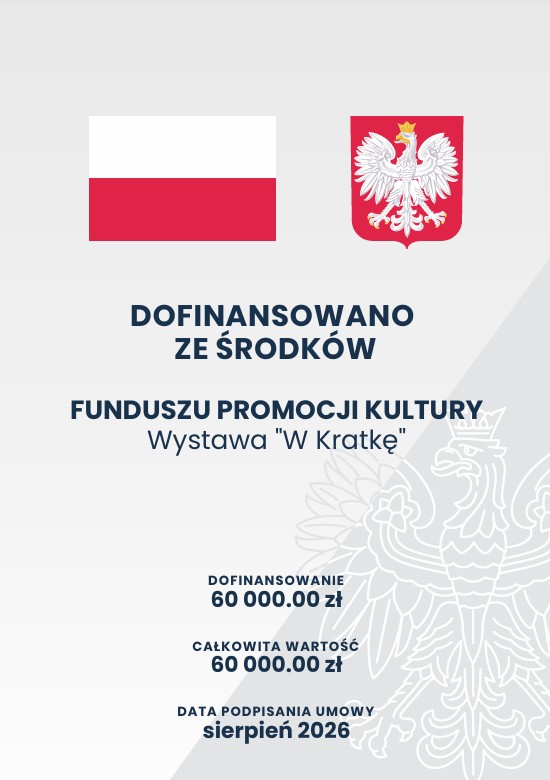
The Exhibition „W Kratkę”

Fundacja Dom Kultury is preparing an exhibition summarising ten years of W Kratkę magazine, created since 2013 by women incarcerated in the Warsaw-Grochów Remand Centre in collaboration with visual artists.

At the end of 2026, Fundacja Dom Kultury will present an exhibition marking the tenth anniversary of W Kratkę – a unique project that has been developed since 2013 in the Warsaw-Grochów Remand Centre.

W Kratkę is one of the most interesting initiatives combining contemporary art, cultural education and socially engaged activities carried out in Polish prisons. The magazine is created by women serving prison sentences in collaboration with visual artists, designers, educators and editors. Each issue brings together two worlds: the experiences of incarcerated people and the language of contemporary culture and art.

In 2026, the tenth anniversary issue of the magazine will be published. To celebrate this occasion, we are preparing an exhibition presenting the achievements of the project and the story of a collaboration that, for more than a decade, has connected incarcerated people with renowned contemporary artists and a younger generation of creators.

Beneficiary

Fundacja Dom Kultury (House of Culture Foundation) 18 Kalenicka Street 03-107 Warsaw, Poland

Project Duration

June 2026 – December 2026

Funding

The project is financed by the Ministry of Culture and National Heritage from the Culture Promotion Fund – a state special-purpose fund, under the Cultural Education Programme.

In accordance with applicable regulations, information about the funding is also published on the Foundation’s social media channels and in promotional materials related to the project.

Amount of funding: 60000 PLN Total project value: 60000 PLN

Date of contract signature: 29 June 2026
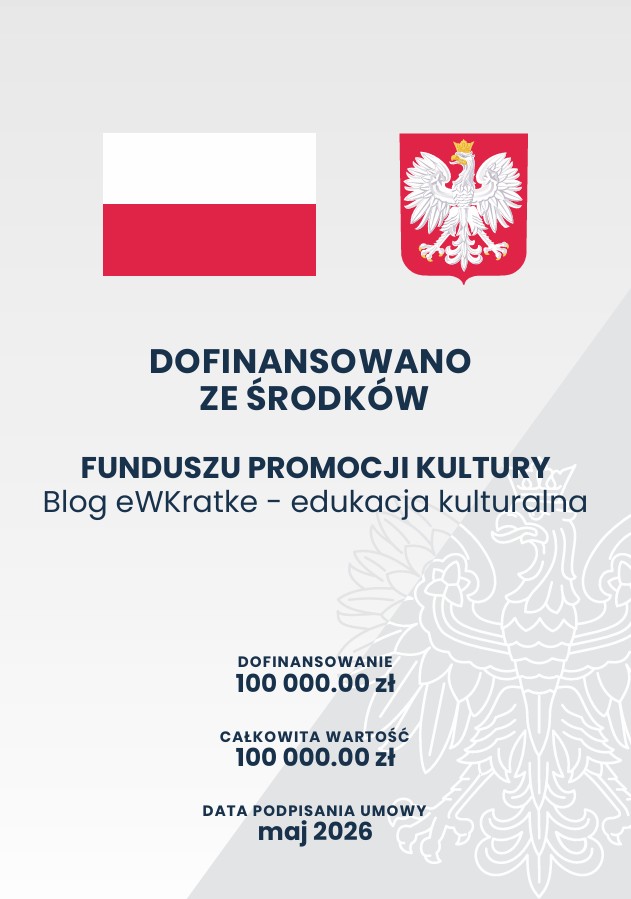
eWkratke Blog – Cultural Education for People in Prison

The House of Culture Foundation (Fundacja Dom Kultury) is implementing the project “eWkratke Blog – Cultural Education for People in Prison” in 2026–2027, with funding from the Ministry of Culture and National Heritage under the Cultural Education Programme.

The project continues the Foundation’s long-term educational work in prisons. Its main goal is to develop the cultural, linguistic and social competencies of incarcerated women through regular participation in cultural education activities and creative workshops.

The programme is carried out in two correctional facilities:

  • Warsaw-Grochów Remand Prison (closed units),
  • External Unit in Warsaw-Bemowo (semi-open units).

Workshops take place four times each month and include writing and editorial classes, meetings with artists and experts from various fields, discussions about culture, literature and the arts, as well as activities designed to foster creativity and self-expression.

The project’s most important outcome is eWkratke.pl, a unique blog co-created by women serving prison sentences. The platform publishes their texts, reflections, interviews, illustrations and reports from cultural events. The blog serves as a space for dialogue between people in prison and society outside, while also functioning as a tool for cultural and social education.

Participants do not have access to the internet. Their texts are written during workshops or in prison cells and are later transcribed and uploaded by volunteers. Readers can comment on the posts, and their messages are delivered to the authors in printed form. The women then write replies by hand, which are subsequently published online. In this way, a genuine dialogue is created between the world behind prison walls and the world beyond them.

The project has a long-term character. The experience of the House of Culture Foundation shows that regular educational activities carried out over an extended period produce lasting results: they strengthen communication skills, build self-confidence and a sense of agency, and support participants in preparing for life after release.

Beneficiary

Fundacja Dom Kultury (House of Culture Foundation) 18 Kalenicka Street 03-107 Warsaw, Poland

Project Duration

March 2026 – December 2027

Funding

The project is co-financed by the Ministry of Culture and National Heritage from the Culture Promotion Fund – a state special-purpose fund, under the Cultural Education Programme.

In accordance with applicable regulations, information about the funding is also published on the Foundation’s social media channels and in promotional materials related to the project.

Amount of funding: 100000 PLN Total project value: 100000 PLN Date of contract signature: 18 May 2026


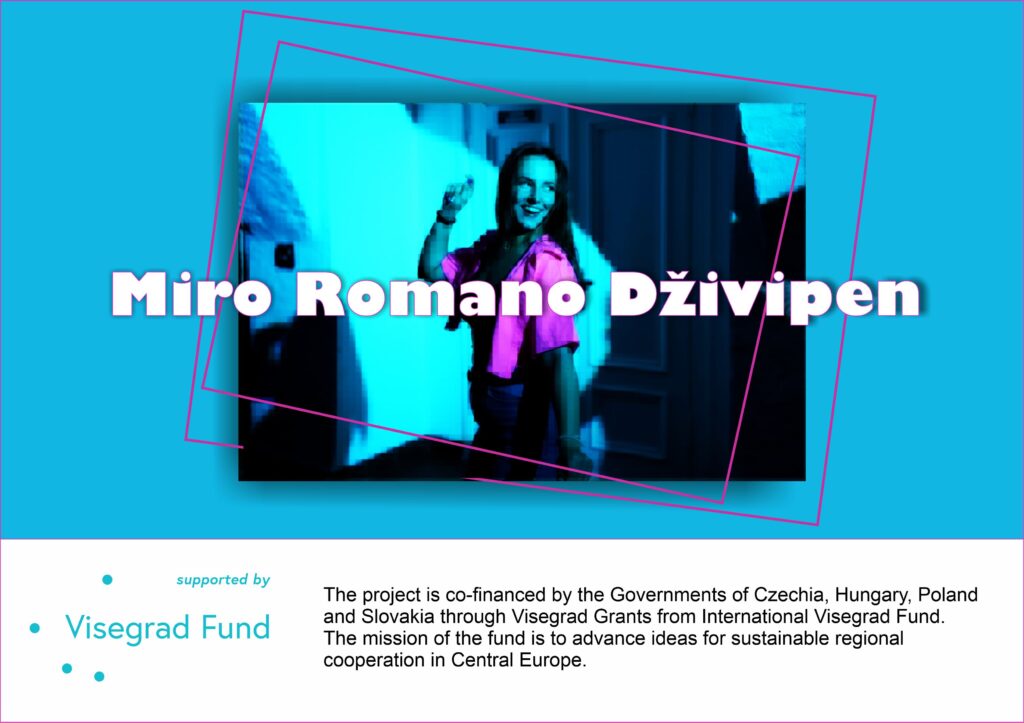
Miro Romano Dživipen (My Romani Heritage) – Music Weekend for Roma Youth from the V4 Countries

Graphics: Małgorzata Brus

We are delighted to announce that our project Miro Romano Dživipen (My Romani Heritage) – Music Weekend for Roma Youth from the V4 Countries has received a grant from the International Visegrad Fund.


The project is co-financed by the Governments of Czechia, Hungary, Poland and Slovakia through Visegrad Grants from International Visegrad Fund. The mission of the fund is to advance ideas for sustainable regional cooperation in Central Europe.

Stand-Up for the Social Reintegration of Prisoners

We are launching a new Polish–Italian project funded by the Erasmus+ Programme. Together with the Italian organisation CCO – Crisi come Opportunità, we will develop and test ways of using theatre and stand-up in work with people in prison to support their preparation for life after release.

The project is based on the belief that culture can be a powerful tool for education, personal development and building relationships. For many years, we have organised theatre, creative writing and arts workshops in prisons across Poland. Our Italian partner has extensive experience in using theatre and performance as educational tools in work with people deprived of liberty and young people. Through Erasmus+, we will bring together the experience of both organisations and develop new approaches to this work.

The heart of the project will be the International Methods Laboratory, where Polish and Italian educators will exchange experience, observe each other’s practice and jointly develop workshop methods based on theatre, improvisation and stand-up. These approaches will then be tested during pilot activities carried out in both Poland and Italy.

The project includes two international meetings – the first in Warsaw in September and the second in Sardinia in February. Between these meetings, both partners will run pilot workshops, evaluate the results and further refine the methods developed during the collaboration.

One of the main outcomes of the project will be a practical Toolkit for educators and practitioners working in prisons. It will include tested workshop methods, practical exercises and recommendations based on the experience of both partners. The publication will be freely available to organisations, institutions and everyone interested in using culture to support the social reintegration of people in prison.

The project is implemented together with CCO – Crisi come Opportunità within the framework of the Erasmus+ Small-scale Partnerships in Adult Education (KA210-ADU). We hope that the methods developed during this collaboration will be useful not only in Poland and Italy, but also in other countries interested in strengthening cultural education in prisons.


Funded by the European Union. Views and opinions expressed are however those of the author(s) only and do not necessarily reflect those of the European Union or the National Agency Programme Erasmus + and European Solidarity Corps. Neither the European Union nor the grantors can be held responsible for them.

Learning to Teach Better: Exploring the Irish Prison Education System

Fundacja Dom Kultury has received Erasmus+ KA122-ADU funding for the project “Learning to Teach Better.” In autumn 2026, a four-member team from the Foundation will travel to Dublin to take part in a job shadowing programme organised by Education Services to Prisons, a division of the City of Dublin Education and Training Board (CDETB) responsible for education in Irish prisons. The mobility aims to provide first-hand insight into the Irish prison education system and create opportunities to exchange experience with professionals responsible for the education of people in custody.

Since 2011, Fundacja Dom Kultury has been delivering educational programmes in Polish prisons. We organise creative writing, journalism, theatre, music and visual arts workshops, publish the “W Kratkę” magazine, run the eWKratke.pl blog, and are developing an online Information Hub for people in prison and their families. Taking part in Erasmus+ gives us the opportunity to explore solutions used in another European prison education system and to exchange experience with Irish prison educators.

During the job shadowing mobility, we will observe the work of professionals responsible for prison education in Ireland. We are particularly interested in learning more about how the system is organised, the role of education in social reintegration, and the cooperation between prison services, teachers and external organisations. We also hope to explore how educational needs are assessed, how learning programmes are planned, and how educational opportunities are tailored to the diverse needs of learners.

Another area we will focus on is the way information is prepared and shared with people in prison and their families. This is especially relevant to our work, as we are currently developing an online Information Hub that provides clear and accessible information about imprisonment and the Polish prison system. The experience gained in Ireland will support the further development of this initiative.

We will share updates on the preparations, the job shadowing visit itself and its outcomes on our website and social media channels.


Funded by the European Union. Views and opinions expressed are however those of the author(s) only and do not necessarily reflect those of the European Union or the National Agency Programme Erasmus + and European Solidarity Corps. Neither the European Union nor the grantors can be held responsible for them.