Fundacja przetwarza dane osób, które:
– Zapisały się do newslettera Fundacji;
– Przekazały darowiznę na rzecz Fundacji;
Newsletter Fundacji Dom Kultury
Dane osobowe, uzyskane poprzez subskrypcję newslettera Fundacji, są przetwarzane za pomocą programu MailChimp®. Podane przez subskrybentów dane kontaktowe (adres e-mail, imię) są przetwarzane przez Fundację Dom Kultury w celu regularnego przesyłania zamówionego newslettera, informowania o wydarzeniach organizowanych przez Fundację oraz wszelkich działaniach składających się na realizację celów statutowych Fundacji.
Subskrybenci newslettera mają prawo dostępu do swoich danych oraz ich zmiany. Podanie danych osobowych jest dobrowolne. Nie dokonujemy automatycznych zapisów do naszej bazy wysyłkowej. Dane osobowe subskrybentów nie są udostępniane żadnym odbiorcom danych w rozumieniu art. 7 pkt 6 ustawy o ochronie danych osobowych.W zakresie realizacji usługi newslettera oraz przesyłanie treści informacyjnych o działaniach Fundacji, Twoje dane będą przetwarzane do czasu wycofania zgody lub wniesienia sprzeciwu względem takiego przetwarzania. Fundacja Dom Kultury zapewnia subskrybentom możliwość usunięcia danych z bazy wysyłkowej w każdym momencie i bez podawania powodu.
Dane darczyńców
Fundację Dom Kultury można wspierać finansowo, przekazując darowizny przelewem na konto lub za pośrednictwem systemu do wpłat online PayU oraz za pośrednictwem Facebooka. W przypadku darowizny przekazanej na konto przetwarzamy dane wymagane przez bank darczyńcy, niezbędne do dokonania przelewu. Podanie danych osobowych jest dobrowolne, ale konieczne dla realizacji celu w postaci przekazania wsparcia finansowego na rzecz Fundacji. W przypadku dokonania darowizny na rzecz Fundacji Dom Kultury dane będą przetwarzane w celu wykonania umowy darowizny, wypełnienia obowiązków prawnych ciążących na Fundacji, a także w celach sprawozdawczych Fundacji. Dane osobowe darczyńców Fundacja przetwarza na podstawie prawnie uzasadnionego interesu, który jest rozumiany jako realizacja misji fundacji w postaci działań na rzecz pełnoprawnego udziału rodziców w przestrzeni publicznej.
Dane darczyńców przetwarzamy w dokumentacji księgowej oraz w programie MailChimp®. Darczyńcy mają prawo dostępu do swoich danych oraz ich poprawiania. Osoba, której dane dotyczą ma prawo w dowolnym momencie wnieść sprzeciw – z przyczyn związanych z jej szczególną sytuacją – wobec przetwarzania jej danych osobowych.
We raise funds to carry out our statutory activities on an ongoing basis, including resocialisation activities in prisons, educational activities in Youth Centres and running the eWKartke.pl blog.
Account number: 28 1600 1462 1821 2325 1000 0001
Close
O NAS
Kultura, sztuka i edukacja to filary Fundacji Dom Kultury.
Od 2007 roku Fundacja Dom Kultury prowadzi działalność zaangażowaną społecznie, wykorzystując sztukę, kulturę i edukację jako narzędzie przywracające ludzi do społeczeństwa.
Włącza artystów, twórców kultury, działaczy społecznych, pedagogów w działania na rzecz środowisk i osób z różnych powodów wykluczanych.
Prowadzi warsztaty artystyczne i edukacji kulturalnej dla młodzieży z ośrodków wychowawczych, więźniów, mniejszości etnicznych i kulturowych, dzieci ze środowisk z problemami, seniorów, a także wszystkich, którzy tego potrzebują. Aktywizuje kulturalnie, artystycznie, społecznie i zawodowo. Dowozi sztukę i kulturę tam, gdzie ich nie ma.
Wyrównuje szanse w powszechnym dostępie do sztuki, kultury i edukacji.
Od 2007 roku prowadzimy działania artystyczne wszędzie tam, gdzie jest na nie zapotrzebowanie. Do wspólnych projektów zapraszamy najciekawszych polskich artystów, edukatorów, kuratorów sztuki i osoby ze środowisk marginalizowanych i wykluczanych z wszelkich powodów. Docieramy do małych miejscowości województwa mazowieckiego, więzień, ośrodków dla uchodźców, ośrodków wychowawczych. pracujemy z mniejszościami.
Sztuka i kultura jest dla nas narzędziem włączania społecznego.
Edukację kulturalną i społeczną prowadzimy w szkołach wszystkich poziomów oraz poza szkołami, wszędzie tam, gdzie jest na takie działania zapotrzebowanie. Dwa razy w tygodniu od 2011 roku mamy zajęcia w więzieniu dla kobiet na Grochowie. Prowadzimy szerokie projekty dla społeczności romskiej i młodzieży z Młodzieżowych Ośrodków Wychowawczych.
“Reading Workshops in Prisons” is a reading development programme implemented by Fundacja Dom Kultury in 2026 in five prisons in the Warsaw district. As part of the project, we will carry out cycles of workshops based on working with literature related to the Warsaw Uprising — memoirs, non-fiction and historical studies.
The project will involve over 100 incarcerated men in: – Warsaw-Białołęka Remand Prison, – Warsaw-Grochów Remand Prison, – Warsaw-Służewiec Remand Prison, – Radom Remand Prison, – Grójec Remand Prison.
In each facility, a cycle of 6 sessions will be delivered.
The project responds to concrete needs: limited access to books, lack of reading habits, and difficulties in working with texts. Literature becomes a working tool here — a starting point for discussion, analysis and structuring knowledge.
The Warsaw Uprising is a topic that is strongly present in prisons and evokes intense emotions. Participants often feel a strong connection to it, but this is not always supported by structured historical knowledge. In many cases, their understanding is based on informal narratives, simplified accounts or popular legends rather than formal education or engagement with primary sources.
For this reason, we work directly with texts: we read, analyse, compare different perspectives and organise facts. The workshops are led by experienced educators who provide historical context and support participants in working with texts.
The project is addressed to men, as they most frequently identify the Warsaw Uprising as a subject that genuinely interests them.
As part of the programme, we deliver historical lectures, discussions of books, authors and literary genres, analysis of selected text excerpts (including Białoszewski, Bratny, Kamiński, Davies), workshops focused on reading comprehension and working with texts, creative writing workshops (short forms inspired by memoirs), as well as performative readings and sessions combining text with Uprising songs.
The workshops are led by: – Piotr Prasuła (Museum of Literature), – Marcin Miros (Warsaw Uprising Museum), – Jerzy S. Majewski (miastarytm.pl), – Dr Paulina Potasińska (Polish Language Foundation), – Adrian Drapich(National Library), – Kinga Kosik-Burzyńska (Klub Komediowy Theatre).
The project continues our long-term work in prisons. Each group participates in a full cycle of sessions, which allows for a gradual introduction to reading, building core text-based competencies and developing knowledge in a structured way. This model enables participants to move from first contact with a text, through understanding, to their own interpretation.
The project is funded by the Minister of Culture and National Heritage under the “Reading Promotion” programme.
Subsidized with funds from the Ministry of Culture and National Heritage from the Fund for Promotion of Culture – state purpose fund
Honorary patronage of the project titled “Inclusive Contemporary Music – Concerts in Prison: Minister of Culture and National Heritage
Honorary patronage of the Honorary patronage of the project titled “Inclusive Contemporary Music – Concerts in Prison: Director General of the Prison Service
Graphics: Klaudia Borawiak
Film production: Izabela Smyk
Inclusive Contemporary Music – Concerts in Prison
In the centenary year of Morton Feldman’s birth, his music was performed in a Polish prison for the first time. It was an unprecedented and courageous undertaking that brought contemporary music into a place where it is rarely heard, creating a unique opportunity to encounter world-class art.
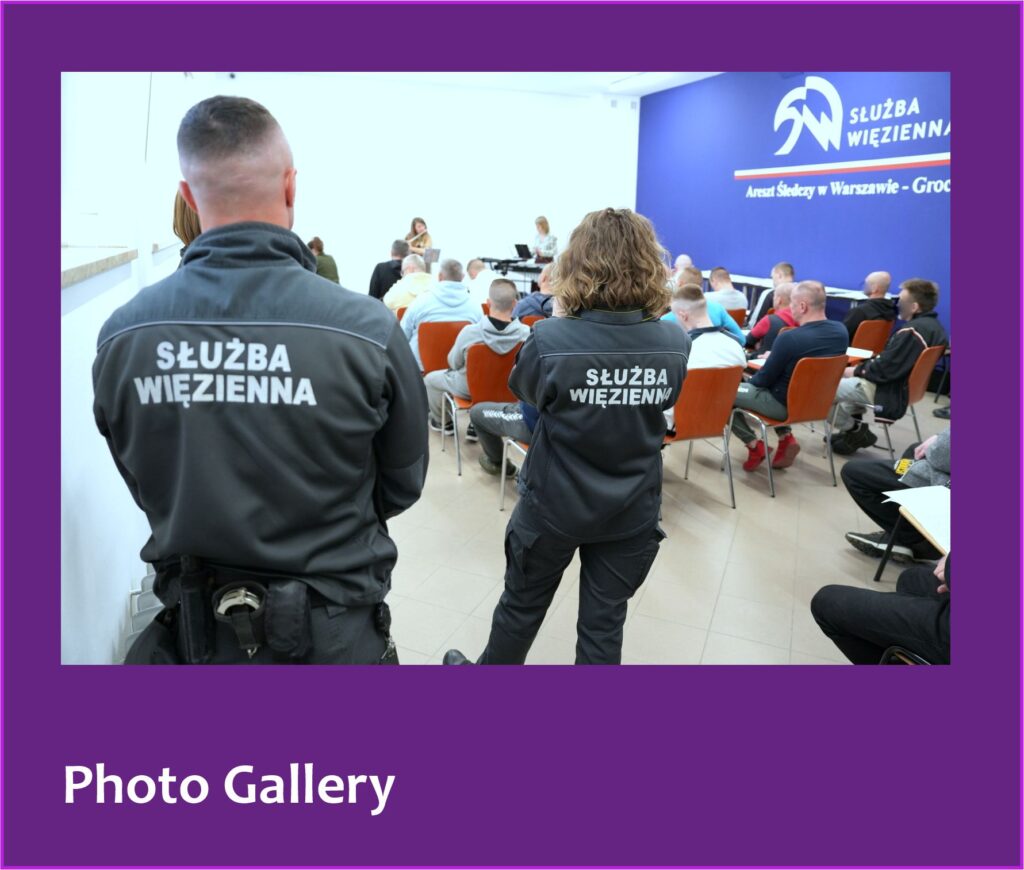
Over two days, the community hall of the Warsaw Grochów Remand Prison was transformed into a concert venue. More than 200 incarcerated participants attended eight performances of Crippled Symmetry (1983). Women took part on the first day, men on the second. This format allowed each group to focus fully on the music and actively engage in the event.
The performances were given by Ewa Liebchen (flutes), Emilia Karolina Sitarz (keyboard instruments), and Magdalena Kordylasińska-Pękala (percussion) – acclaimed performers of contemporary music. For the musicians themselves, performing in a prison was an exceptional experience. They all described it as one of the most moving moments of their artistic careers.
Each concert was preceded by a short introduction to Morton Feldman’s work. Participants learned about the composer, his unique musical language, and ways of listening to this demanding composition. As a result, the concerts became an accessible and engaging experience rather than something unfamiliar or intimidating. For most participants, it was their first opportunity to hear contemporary music performed live.
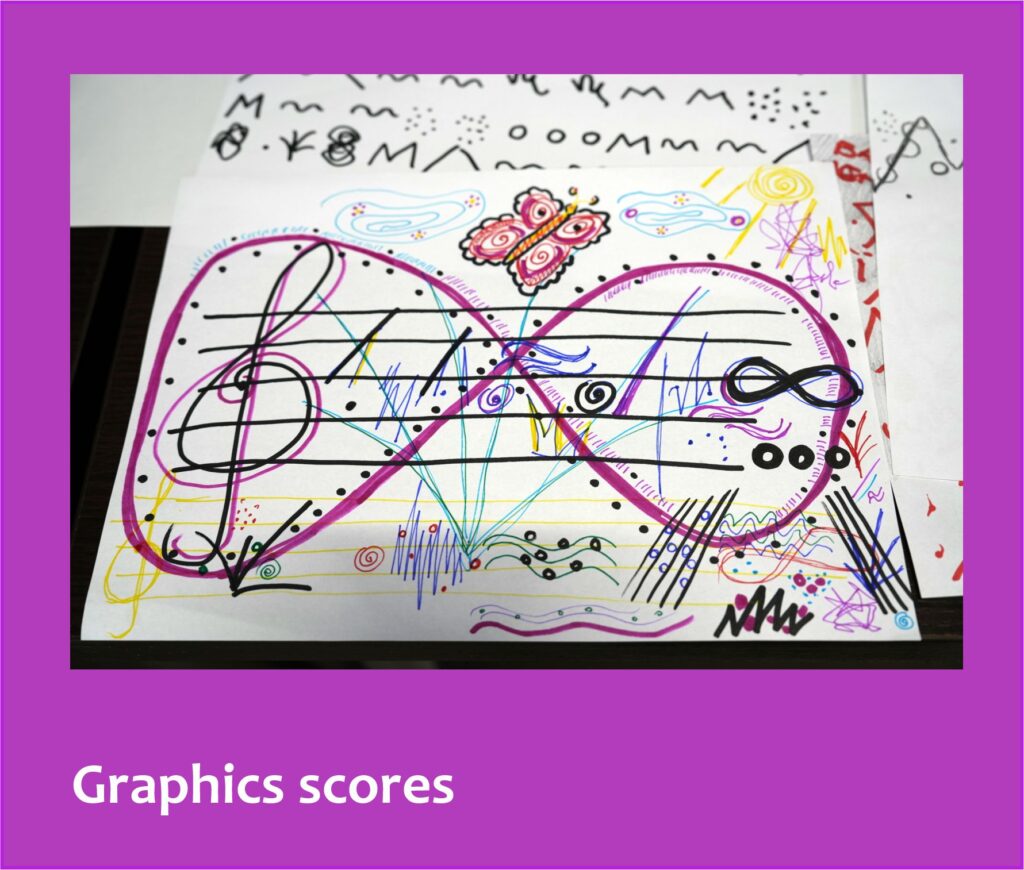
An integral part of the project was the creation of graphic scores. Participants translated their impressions of the music into images, lines, colours, and symbols, producing personal visual interpretations of the piece. The works they created revealed the many different ways music can be experienced and understood.
The concerts were attended by representatives of the Ministry of Justice and senior officials of the Polish Prison Service. Their presence highlighted the importance of cultural education as part of the social reintegration process and the value of cooperation between public institutions and non-governmental organisations.
The project was made possible through the commitment of many people. For the musicians, the team of Fundacja Dom Kultury, and the staff of the Warsaw Grochów Remand Prison, these two days were not only the result of intensive preparation but also a powerful shared experience that demonstrated how art can reach places where it is least expected.
We invite you to explore the photo galleries, watch the video, and listen to the podcasts created as part of the project. They offer a chance to revisit this remarkable event, which introduced Morton Feldman’s music into a prison for the very first time, and to discover the story behind this unique initiative.
The project Contemporary Inclusive Music – Concerts in Prison was funded by the Minister of Culture and National Heritage under the Accessible Culture programme, financed by the Culture Promotion Fund – a state special-purpose fund. The project was carried out in partnership with the Warsaw Grochów Remand Prison and the District Inspectorate of the Prison Service in Warsaw.
Podcasts
Contemporary Inclusive Music – Concerts in Prison
Podcast 1 Author: Mariana Krill
A conversation about the role of culture and education in prisons, and why access to the arts should include people with limited access to culture, including those deprived of their liberty.
The podcast refers to the project Contemporary Inclusive Music – Concerts in Prison, carried out on 7–8 May 2026 at the Warsaw Grochów Remand Prison. As part of the project, four performances of Morton Feldman’s Crippled Symmetry were presented by Ewa Liebchen, Emilia Karolina Sitarz, and Magdalena Kordylasińska-Pękala. The concerts were accompanied by introductions to the composer’s work and by graphic score workshops for participants.
The project was implemented with funding from the Minister of Culture and National Heritage under the Accessible Culture programme, financed by the Culture Promotion Fund – a state special-purpose fund.
Produced by: Fundacja Dom Kultury, 2026
Project partners: Warsaw Grochów Remand Prison and the District Inspectorate of the Prison Service in Warsaw.
Contemporary Inclusive Music – Concerts in Prison
Podcast 2 Author: Mariana Krill
A conversation about the exceptional event of presenting Morton Feldman’s Crippled Symmetry in the year marking the centenary of the composer’s birth at the Warsaw Grochów Remand Prison. For the first time, Feldman’s music was performed in a Polish prison, where more than 200 incarcerated participants attended four concerts, discovering contemporary music and learning new ways of listening.
The podcast refers to the project Contemporary Inclusive Music – Concerts in Prison, carried out on 7–8 May 2026. The concerts were performed by Ewa Liebchen, Emilia Karolina Sitarz, and Magdalena Kordylasińska-Pękala. The events also included introductions to the composer’s work and graphic score workshops for participants.
The project was implemented with funding from the Minister of Culture and National Heritage under the Accessible Culture programme, financed by the Culture Promotion Fund – a state special-purpose fund.
Produced by: Fundacja Dom Kultury, 2026
Project partners: Warsaw Grochów Remand Prison and the District Inspectorate of the Prison Service in Warsaw.
The 2026 project was co-funded by the Minister of Culture and National Heritage from the Culture Promotion Fund.