Miesiąc: maj 2025
Two Exhibitions
Honorary patronage of the WE Exhibition: Minister of Culture and National Heritage
Honorary patronage of the WE Exhibition: Director General of the Prison Service


Graphics: Renata Motyka
Two Exhibitions – Participatory Art in Prisons
ART does not judge: culture only makes sense when it includes everyone.
The project Two Exhibitions, carried out by the Dom Kultury Foundation, consisted of five cycles of educational classes and creative workshops held simultaneously in four Warsaw remand prisons – Grochów, Bemowo (External Unit), Białołęka and Służewiec. The participants were people serving prison sentences – women and men of different ages, coming from various regions of Poland, often experiencing social and cultural exclusion from an early age.
The workshops were participatory in nature – participants were co-authors of the creative process. In the theoretical part, they gained knowledge of art history and selected artistic disciplines; in the practical part, working alongside invited artists, they created their own works and co-developed workshop concepts.
For many, this was the first conscious engagement with culture and their first experience of being creators rather than solely recipients.
Artists and educators long associated with the Foundation took part in the project: Małgorzata Gurowska and Joanna Ruszczyk, Małgorzata Jabłońska and Piotr Szewczyk, Waldemar Petryk and Kwiaciarnia Grafiki (Kwiatuchi).
Renata Motyka prepared the post-project publication.
The artists worked through dialogue and openness, treating their presence inside the prison environment as part of the social responsibility inherent in their artistic practice.
To be heard (WE, the exhibition)
The project concluded with two identical exhibitions:
– the first, intended for incarcerated participants and invited guests, took place at the end of November at the Warsaw-Białołęka Remand Prison,
– the second, open to the public, was presented in December at Galeria Studio (Studio Teatr Galeria).
Both exhibitions presented the same objects created during the workshops as well as photographic documentation.
The project Two Exhibitions created a space for social integration and for changing public narratives about people deprived of liberty. Participants were able to present their own perspectives and appear in the public sphere as authors. One of the outcomes of the project was its contribution to reducing stereotypical perceptions of this group and highlighting their creative potential.
The results of the project, along with the publication prepared by Renata Motyka, were made available online to reach a wide audience, including educators, curators, artists and people interested in inclusive culture and socially engaged art.
The Two Exhibitions project became an example of effective cooperation between different sectors – cultural institutions, a non-governmental organisation and penitentiary units. It introduced tools of culture and creativity into isolated environments and later presented the outcomes in one of the central cultural venues of the city.
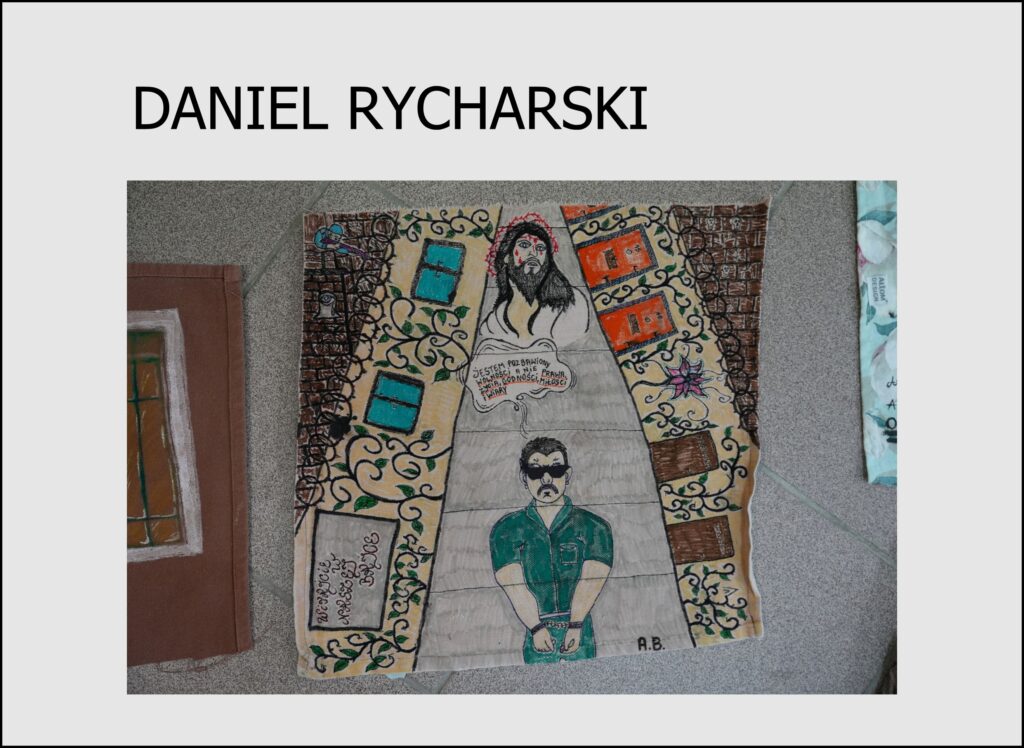

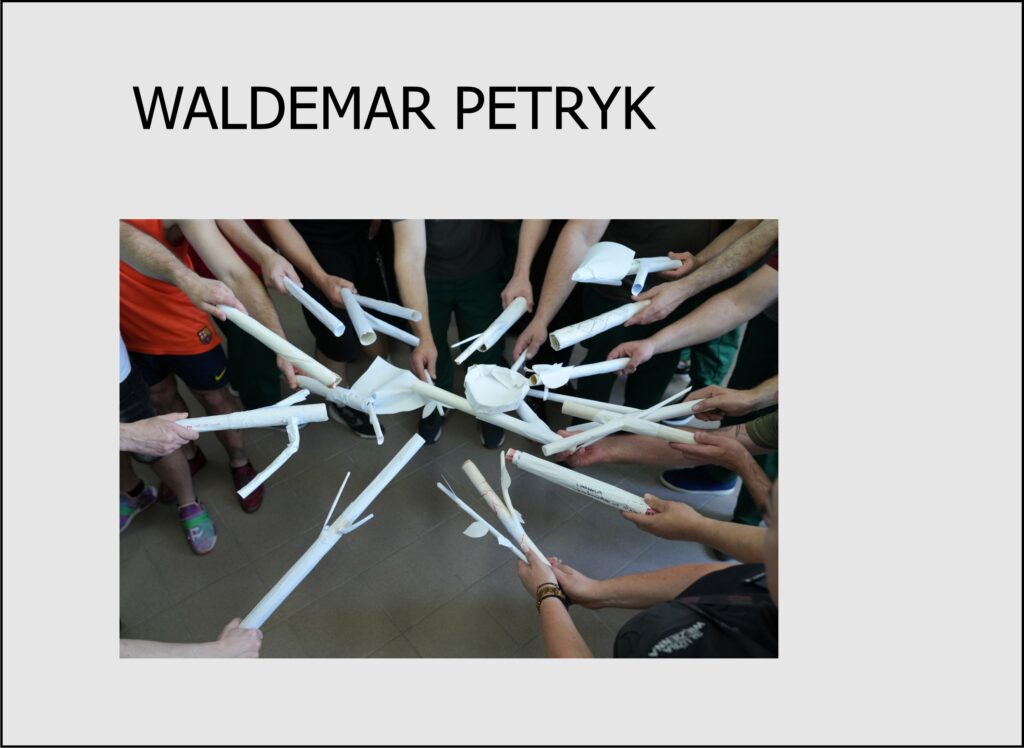


Exhibition I

Exhibition II
Photo: Archive Fundacja Dom Kultury


Panorama Miasta
Panorama Miasta – A Shared Story of Diverse Warsaw
Project Organizer: Fundacja Dom Kultury
Co-organizer of the project: Nowe Centrum Warszawy
Project Description
“Panorama of the City” is an artistic and integrative project that connects Warsaw’s residents through joint creative activities. Its goal was to create a large-scale painting installation reflecting the diversity of the city’s community. The final event was open to everyone — children, adults, seniors, residents, and tourists — and concluded with the collective creation of the painted Panorama of the City in the square in front of the Palace of Culture and Science on June 28, 2025.
Project Objective
The main goal of the project was social integration through artistic activities and enabling people from various backgrounds — especially those with limited access to culture — to create an artwork together. The project provided space for self-expression, sharing personal stories, and experiencing collaboration beyond social divisions.
Graphics: Klaudia Borawiak
Project Locations
The workshops took place in the premises of the participating communities: the Regional Youth Educational Centre in Falenica, the Multicultural Centre, the Nowolipie Group, Dorożkarnia Cultural Centre, the Warsaw-Grochów Remand Prison, and the Anti-Crisis Club. The main event, during which the panorama was collectively created, took place on June 28, 2025, at Central Square next to the Palace of Culture and Science.
Number of Workshops and Method of Implementation
As part of the project, six workshops were held to design sections of the panorama, led by Warsaw-based artists. Participants created their own concepts and sketches of the panorama’s “puzzle pieces,” which were later transferred onto large-format plastic fabrics. During the final event, these puzzle pieces were collectively painted with acrylic paints according to the prepared designs.
Workshop Facilitators
Renowned artists and cultural animators were involved in the project:
- Robert Kwaśniewski (Anti-Crisis Club)
- Waladek Petryk and Irshad Manammal (Multicultural Centre, Polish Migration Forum)
- Joanna Świerczyńska and Julia Bistuła (Nowolipie Group)
- Edyta Kranc (Warsaw-Grochów Remand Prison)
- Praktis (Regional Youth Educational Centre in Falenica)
- Agnieszka Sadurska (Dorożkarnia Cultural Centre)
Project Curator: Damian Kalita, Head of the Education Department at Teatr Studio Gallery.
Project Coordinator: Małgorzata Brus, Fundacja Dom Kultury.
Participants
The project involved individuals from marginalized groups, migrants, people experiencing homelessness, seniors, people with disabilities, inmates, as well as all interested residents of Warsaw and tourists.
Partners
In implementing this remarkable project, we collaborated with STUDIO teatrgaleria, Bar Studio, PKiN Sp. z o.o., the Polish Migration Forum, Nowolipie Group, the Regional Youth Educational Centre in Falenica, and the Warsaw-Grochów Remand Prison.
Project Timeline
The project was implemented from March 14 to July 31, 2025.
The final event took place on June 28, 2025, from 11:00 AM to 7:00 PM.
Slide content
Slide content
Slide content


Graphics: Magdalena Gładecka
Summer Workshop Camp: Krzyżowa 2025


A Summer Workshop Camp for Romani Youth and Civil Society Organizations from the Visegrad Group Countries
Amaro Romano rat – Romani song lyrics
Summer Workshop Camp 2025: Miro Romano rat, miro barwalipen – My Roma blood, my wealth
In the second half of August 2025, the next edition of the Summer Workshop Camp – a week-long workshop camp for Roma youth from the Visegrad countries – took place at the International Youth Meeting Centre in Krzyżowa, Poland.
The event brought together four partner organizations: Fundacja Dom Kultury (Poland – project leader), Vzájemné soužití o.p.s. (Czech Republic), ETP Slovensko (Slovakia), and Khetanipe Romano Centro (Hungary). The project was made possible thanks to the support of the International Visegrad Fund.
The camp was designed for Roma youth from Poland, Czechia, Slovakia, and Hungary. As in previous years, 24 participants – both girls and boys aged 13 to 23 – were selected by the partner organizations. The main goal of SWC 2025 was to develop social skills, strengthen Roma identity, and foster international collaboration among organizations working with the Roma community.
A special role was played by the venue itself – the International Youth Meeting Centre in Krzyżowa, operated by the Krzyżowa Foundation for Mutual Understanding in Europe. Participants had access to fully equipped workshop rooms, including beautiful halls in a historic palace, integration spaces, a large park, sports fields, and a community garden full of herbs and cherry tomatoes – perfect for shared meals. Vegetarian and vegan meals were also available, and the entire space was accessible to people with disabilities.
The camp opened with a late-night bonfire while waiting for all groups to arrive. Though everyone was tired after the journey, curiosity and excitement were in the air. From the very first day, workshops were in full swing. Each group gave a short presentation about their organization and its activities. Then began several days of Roma identity and storytelling workshops, led by Dr. Monika Szewczyk from Jagiellonian University – a Roma scholar and activist. Her sessions encouraged participants to explore their personal and family histories and to find meaning in their roots.
One of the camp highlights was the video and rap workshop led by filmmaker and music creator Delfin Łakatosz. Participants wrote their own lyrics, which they then performed and recorded. The result was a moving video clip capturing their voices, stories, and shared experience at SWC 2025.
Equally powerful were the Roma cooking workshops, led by Dziunia Biz – a warm, charismatic cook, artist, and performer. Everyone took part in preparing traditional dishes that included foraged herbs, wild apples, and plums. Dziunia gladly shared the secrets of her recipes, and the kitchen became a space of joy, storytelling, and community.
Another key part of the program was focused on environmental awareness and sustainable development. During the “Save the Planet” session, the group discussed the impact of industrial meat production and prepared a fully vegan lunch together. Since traditional Roma cuisine is typically meat-based, organizers initially had concerns about how the group would respond. However, those fears quickly vanished. The participants embraced the challenge and – importantly – chose what they wanted to cook themselves. The result was a colourful spread: Hungarian lecsó, Czech-style dumplings, and a variety of vegetable-based spreads and dishes that everyone enjoyed with enthusiasm.
Evenings were filled with games, dances, and group bonding. One night, the Slovak team organized a thrilling scavenger hunt through the forest and surrounding village – a creative and slightly spooky terrain game that brought lots of excitement.
The final day of the camp featured a trip to Świdnica, where the scouts from the “Mrówkojady” troop prepared an engaging urban game. After returning to Krzyżowa, everyone gathered for the closing music and dance workshops led by Angelo Ciureja, accompanied by dancers Klara and Otylia from the group Romano Drom. The evening ended with a deeply emotional moment: a group performance of the Roma anthem “Gelem Gelem”, which brought the whole camp together in unity and pride. Afterward, participants shared a last meal by the fire and reflected on their time together.
SWC 2025 was full of incredible people, each contributing something unique. From Slovakia came group leaders Dávid and Antoine, along with youth participants Maroš, Anastázia, Jaroslava, Lukáš, Mária, and Kristián. From Czechia came leaders Věra and Milan, with special guest Kumar Vishwanathan, and youth participants Nikola, Jozef, Tomas, Nela, and Samanta. A new partner this year was Khetanipe Romano Centro from Hungary, with leaders Adrienn and Abigel and participants András, Szilárd, Dávid, Bianka, Rómeó, and Renátó. Representing Poland were Gloria, Alwaro, and Valeriia, with group leader Marta.

Though each person arrived from a different country, speaking a different language and carrying different experiences, in Krzyżowa they formed a community. What remains are the photos, videos, new skills and knowledge – but most importantly, the connections, memories, and warmth that each person took home in their heart.


Programme Summer Workshop Camp – Krzyżowa 2025
The project is co-financed by the Governments of Czechia, Hungary, Poland and Slovakia through Visegrad Grants from International Visegrad Fund. The mission of the fund is to advance ideas for sustainable regional cooperation in Central Europe.


Summer Workshop Camp – Warszawa 2024

Summer Workshop Camp – Oświęcim 2023
